This is part 3 of a 3 part series. You can read part 2 The Anatomy of a Prompt here
Don’t have the time to read the entire article? You can listen to it here.
The Current Wars of the 21st Century
As depicted in the 2017 film The Current War, Thomas Edison and George Westinghouse battled for the future of America’s electrical grid. Edison wanted proprietary control and direct current; Westinghouse bet on open standards and alternating current. They weren’t just arguing over electrical currents; they were fighting for ownership of the infrastructure that would power the world.
The War of the Currents was not ultimately won simply because AC was better than DC. It was about the architecture through which electricity would scale.
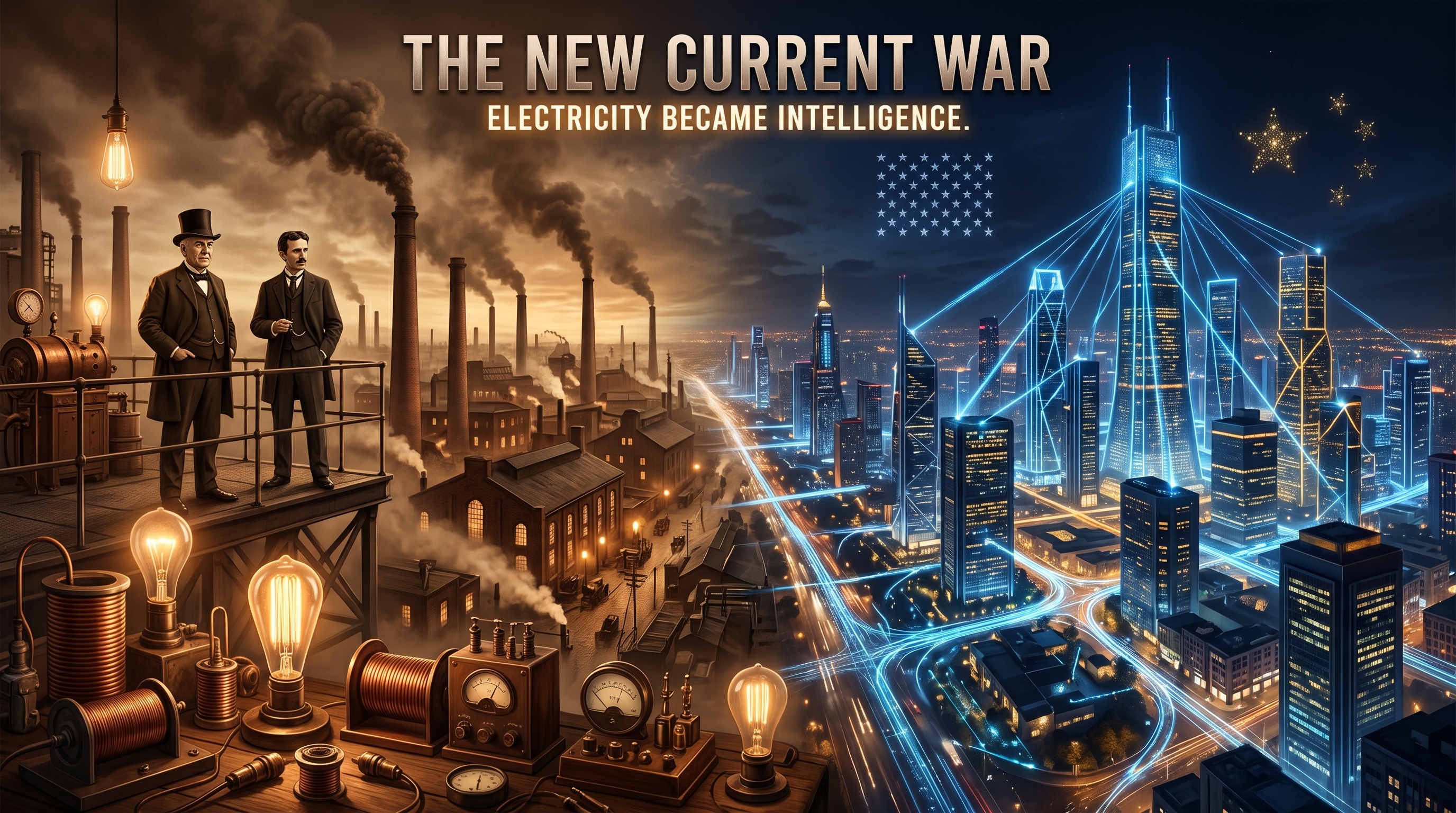
Today, a similar war is playing out. The grid is replaced by intelligence, and the combatants are no longer two men in New Jersey, but two superpowers.
The Hardware or The Model
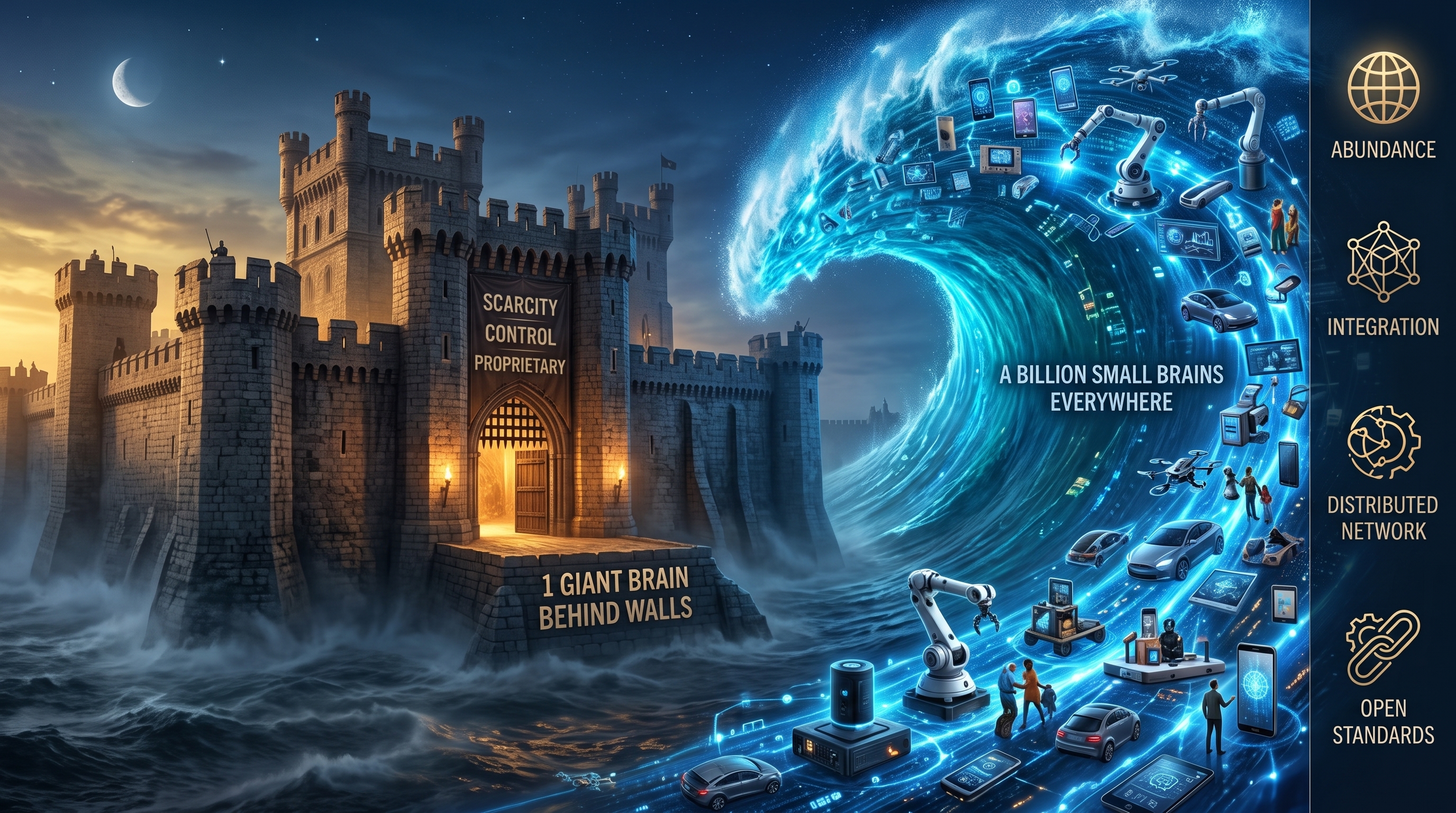
The United States has been trying to lead in artificial intelligence by controlling the powerful hardware. The philosophy is to control the moat - big frontier models and the hardware they need to run on.
China, however, is playing a different game. Not having access to the same level of hardware, China has pivoted from the Moat to the Tsunami. The philosophy seems to be one of abundance and integration. Prioritizing token density. The open weights reduce inferencing costs for downstream developers outside the API paywalls.
In 2026, a crossover point arrived where Chinese models overtook U.S. models in weekly token consumption on OpenRouter, the world’s largest AI aggregation platform.
While the West was debating the safety of open-source weights, China was embedding optimized, local models into the very fabric of daily life—WeChat, Alipay, and the robotic factory floor.
- The U.S. wants to own the engine. Build the smartest engines and control the compute.
- China wants to own the miles driven. Make intelligence abundant and integrate it everywhere.
The Sovereignty of the Open Model
The war of open vs. proprietary models is not just a debate for developers. It is a battle for Digital Sovereignty.
For China, open models are the workaround for the hardware moat.
Microsoft’s Satya Nadella has warned against an over-reliance on closed frontier labs, arguing that “if learning flows in only one direction, economic value converges toward the owners of the learning infrastructure.”
The open model is not just a technical workaround. It can also accelerate the independence from the centralized cathedral of compute. An optimized smaller model can run on cheaper hardware, creating a decentralized intelligence mesh.
Sanctioning an optimized smaller model is not as easy as sanctioning a hardware chip.
The “Journey of a Prompt” from Chapter one looks different in this light. In the U.S. model, your prompt travels to a proprietary cathedral of compute, priced and metered by whoever owns it.
In the Chinese model, the prompt often reaches a near-frontier open model at a fraction of the cost. Who owns the toll booth? In a proprietary API world, the model owner owns the toll booth.
In an open-weight world, the model may be free, but the value shifts to whoever owns distribution, integration and hardware.
And for those willing to run the weights themselves, the tolls keep getting smaller. A company can take an open model into its own data center and pay only for hardware and power. No per-token fee. No dependency on someone else’s pricing, uptime, or export license.
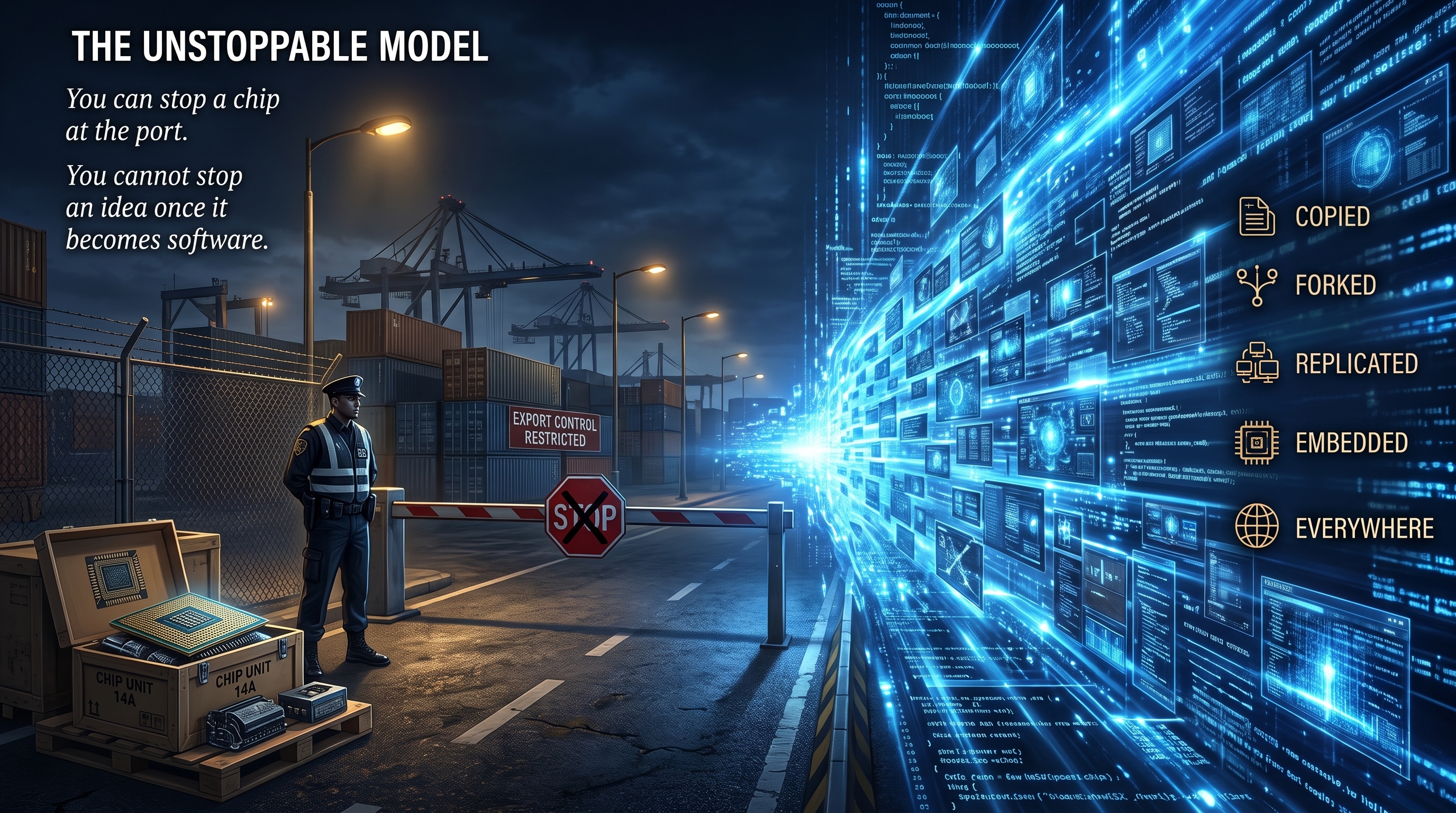
A chip has a serial number and a shipping manifest. A model has neither. Ban one file and it has already been copied, forked, and renamed before the policy takes effect.
The chip war can be fought at the port. The model war has to be fought inside a million data centers.
The Future of the Standard
As we move toward 2030, the question is no longer who has the smartest model, but who has the most Integrated Tokens.
Is the U.S. going to control the hardware while China moves towards controlling the application? If so, will the rest of the globe choose the standard that is cheaper to run, easier to adapt, and doesn’t require an export license from Washington?
While one side is busy fighting over who builds the lightbulb, the other side is already wiring the entire house.
In the original Current War, Westinghouse won because his system was easier to scale. In the Model War, will the winner be the one with the biggest moat or the one whose tokens are as common, invisible just like the air we breathe?
Back on the factory floor, the automated feeding machine from Modern Times is no longer just trying to feed the worker, or even the grid. It is trying to feed the entire world, one invisible token at a time.
The future winner may not be whoever makes the smartest AI, but whoever makes AI disappear into everything. The winner may be the one whose tokens become as common—and as invisible—as the electricity flowing through the walls.
We rarely consider alternating current when flipping on a light switch. We may soon stop thinking about tokens every time we engage with intelligence.
Eventually, the model itself will fade into the background, the way we stopped asking who generates the current every time we flip a switch. The only question left will be how many things around us are quietly making decisions with intelligence.
This is the era of the Integrated Token — intelligence so woven into daily life that no one thinks to ask which model is running it.
The question is no longer whether the machine will break down and leave us laughing. The question is whether we will even notice it is there.
But asking who wins may be the wrong question, the same way asking whether AC or DC won missed what the Current War was really about. The question is who does the churning and who owns what’s poured.
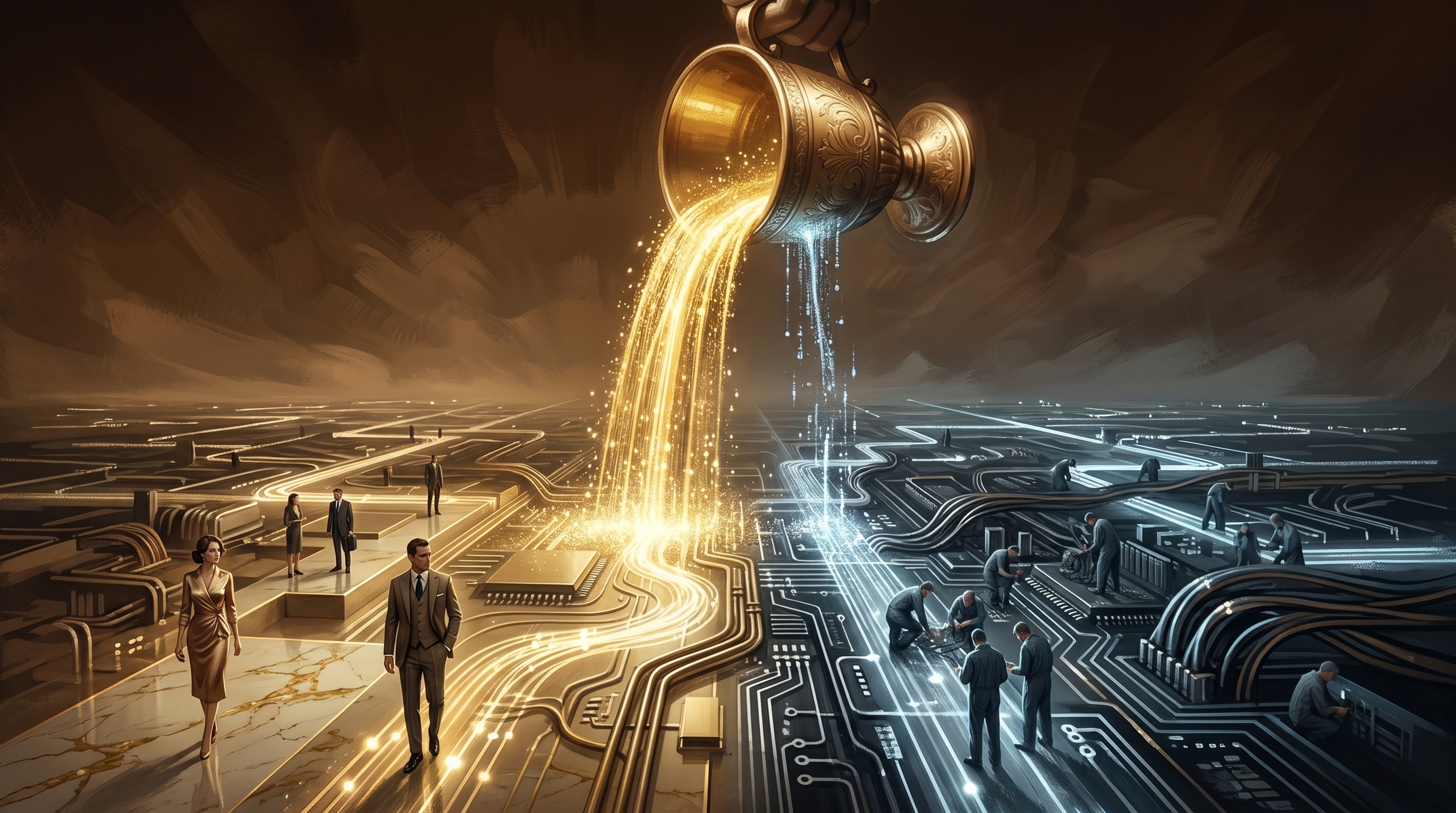
The Cup and the Hand (Amrita, the Nectar Divided)
Eventually, the ocean kept its older promise. The Amrita rose.
Both sides had pulled the same rope. Both had endured the same poison. Both believed the nectar belonged to whoever had labored hardest to bring it up.
But before either side could claim it, a stranger arrived at the shore—Mohini. She was not a stranger at all. She was Lord Vishnu, wearing the one form built for this one purpose.
She did not fight for the cup. She simply offered to pour. The Asuras agreed, enchanted by the very form built to enchant them. They had no reason yet to doubt her.
So she started pouring. She served the Devas first. And by the time the Asuras understood what was happening, the cup was empty.
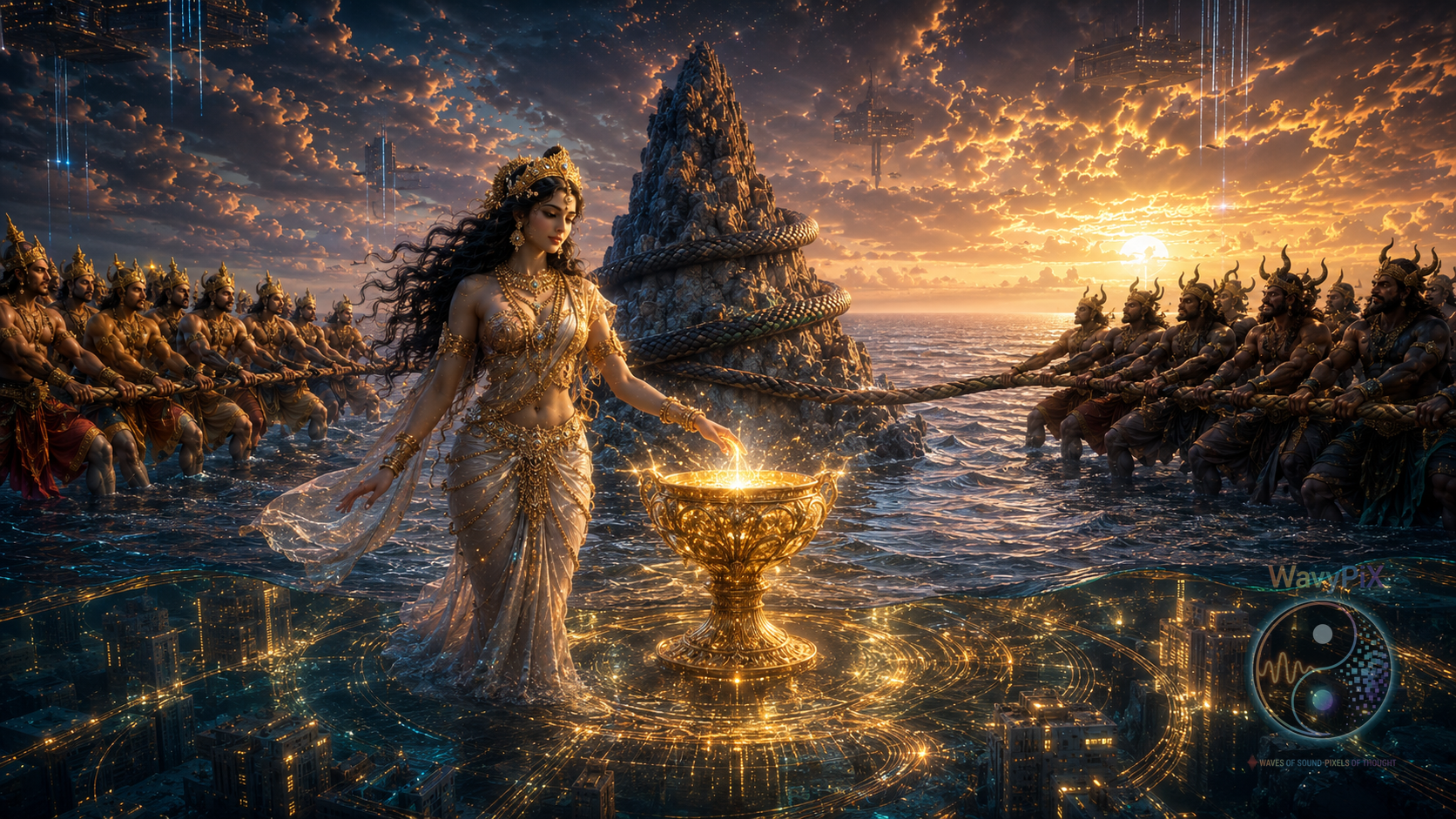
The labor had been equal. The outcome was not.
Who is going to control the distribution of what intelligence produces?
Power, in the end, was never about who could churn the ocean. It was about who got to pour, and who was made to trust the hand doing the pouring.
The question is not who controls the infrastructure or who controls the model but who is going to hold the power to pour—the Amrita, the token, or the universal basic income.
This is the concluding Part 3 of 3 - Anatomy of a Prompt published originally at https://wavypix.com