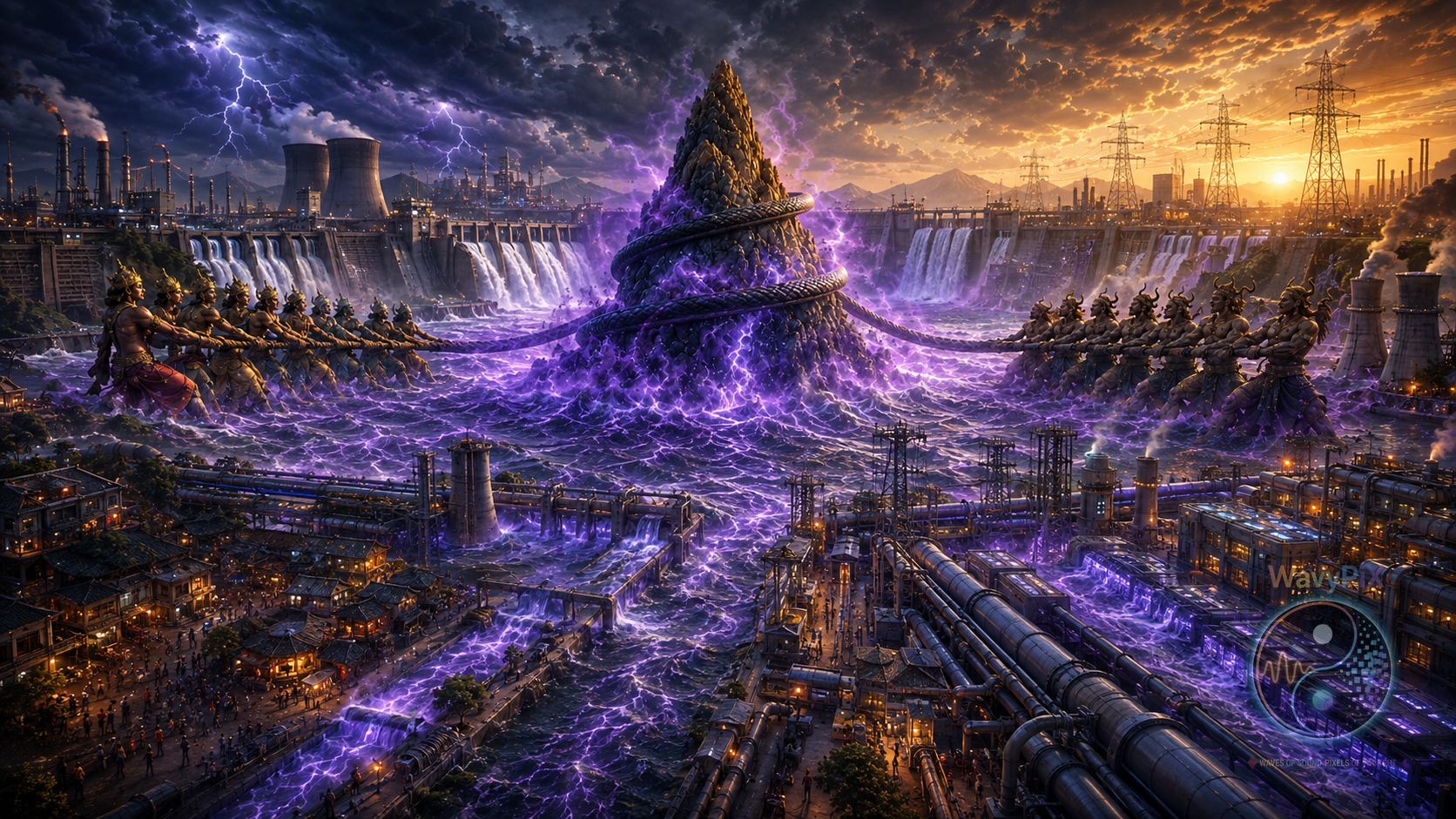
The Energy Wars: Chinatown in the Cloud
This is Part 2 of 3 - Anatomy of a Prompt series.
You can read part 1 here
Don’t have the time to read the entire article? You can listen to it here.
“Either you bring the water to L.A., or you bring L.A. to the water.” - Noah Cross’ character from the film Chinatown, 1974.
Today, the same logic governs machine intelligence. Bring the power to the data center or bring the data center to the power.
Water still cools the machines. Minerals still form their circuitry. But electricity is the current that sets the entire system in motion.
In this long thermodynamic chain, the final expected outcome is machine cognition leading to the so-called singularity. Would humans even know when that singularity comes and passes them by?
And as the demand for machine cognition rises, a new struggle begins from the server rack to the power grid, and from the power grid back to the earth.
The Metered Breath of the AI Era
For the common man, the AI era feels like a gift. It summarizes the emails. It writes the code. It generates the art. It feels inexpensive, if not free.
For some, a model thinking for us is a great extension of human cognitive capacity that will eventually take us all further than the natural evolution.
And for others, that same model could diminish human agency, pushing us further into a void of blankness.
However, it is undeniable that the model draws a significant amount of breath from the grid to satisfy the demands of every task.
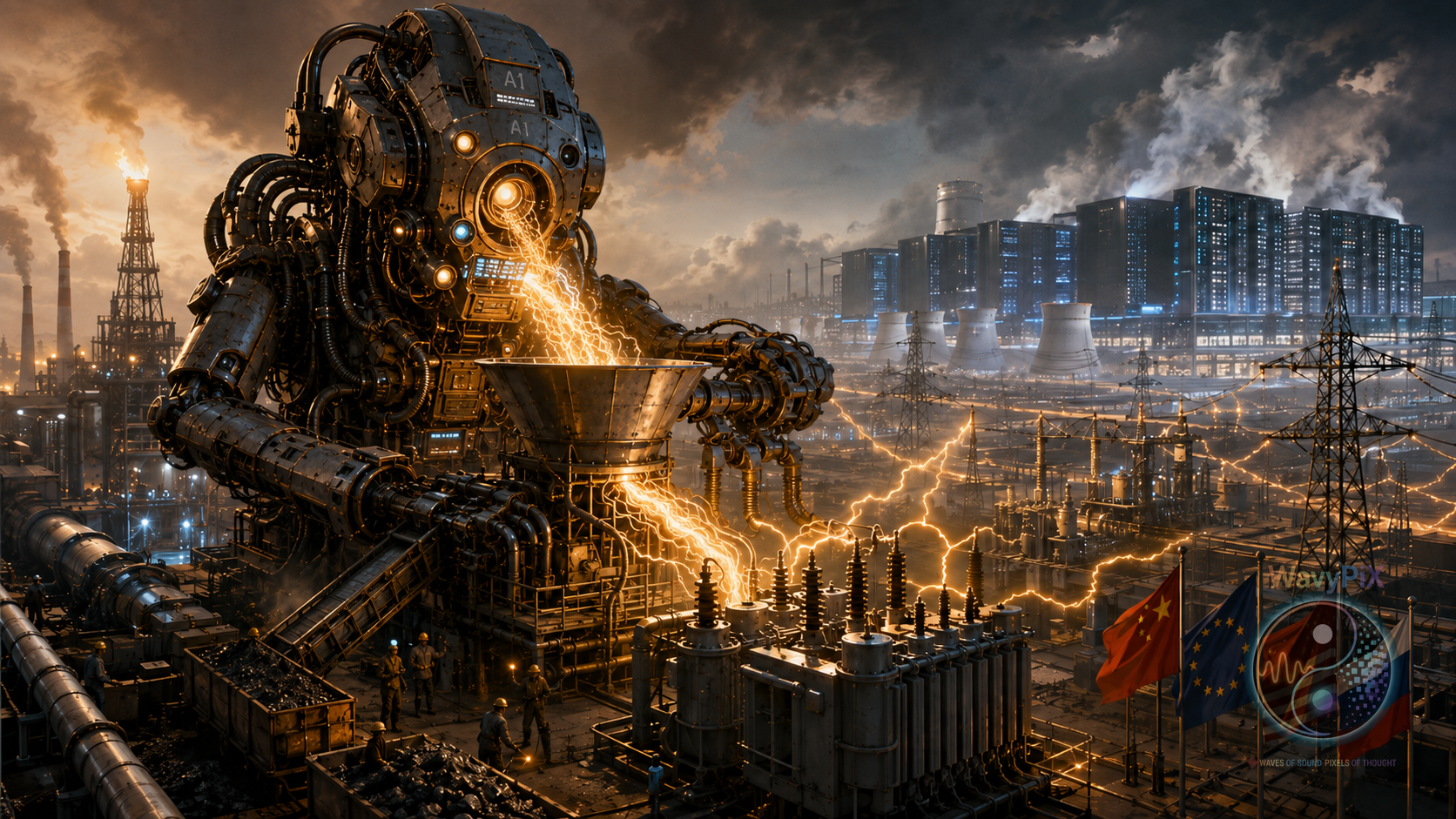
The Race for the Grid
This sets in motion a race—between corporations, between governments—a race to secure the resources and energy to sustain the future appetite of the models.
The irony is that companies and countries that have spent decades debating the cost of feeding human beings now speak of the urgency to feed the machines.

The Automation Paradox
The feeding machine from Charlie Chaplin’s Modern Times has returned. But this time, it is not feeding the worker. It is feeding the grid.
If the machine no longer needs the worker to produce, then the factory no longer needs to pay the worker to survive.
As machines take on a greater share of production and cognitive load, one has to wonder: How will human beings receive a share of prosperity when wages are no longer the primary means of distributing wealth?
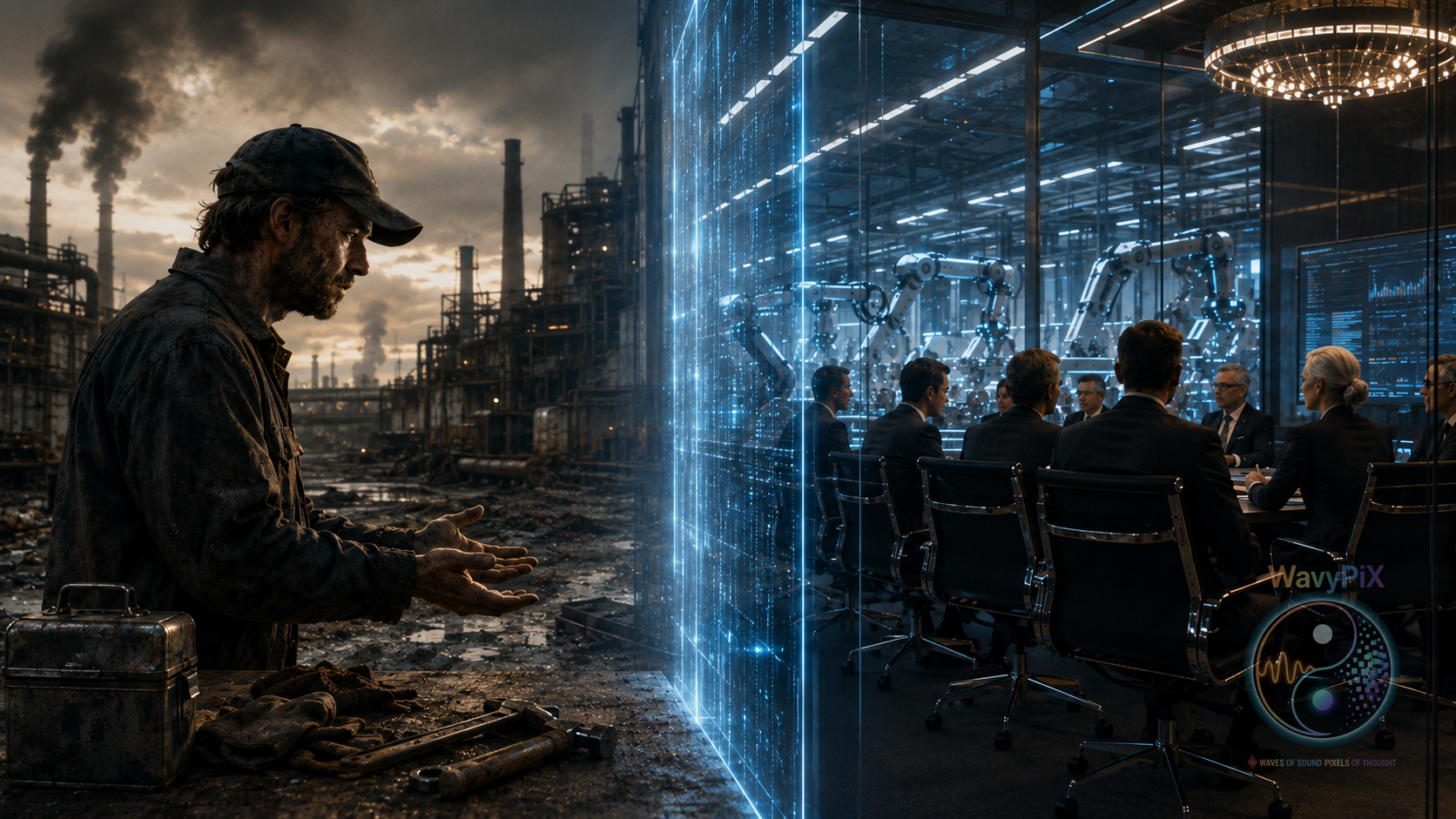
One proposed answer has a familiar name: Universal Basic Income.
The Planetary Ledger
We are entering an era of thermodynamic inequality.
Entropy is “a measure of the quantity of energy not capable of conversion into work.” — Isaac Asimov
Was the inequality there before? Of course, yes. Data centers have always required electricity, water, land, minerals, cooling and physical infrastructure.
But AI changes what that infrastructure produces. The previous generation of data centers primarily stored, processed and transported information. The new generation increasingly converts electricity into predictions, decisions, images, code, automation, and machine labor.
AI does not merely consume energy. It converts energy into cognition.
Every conversion loses something. You never break even.
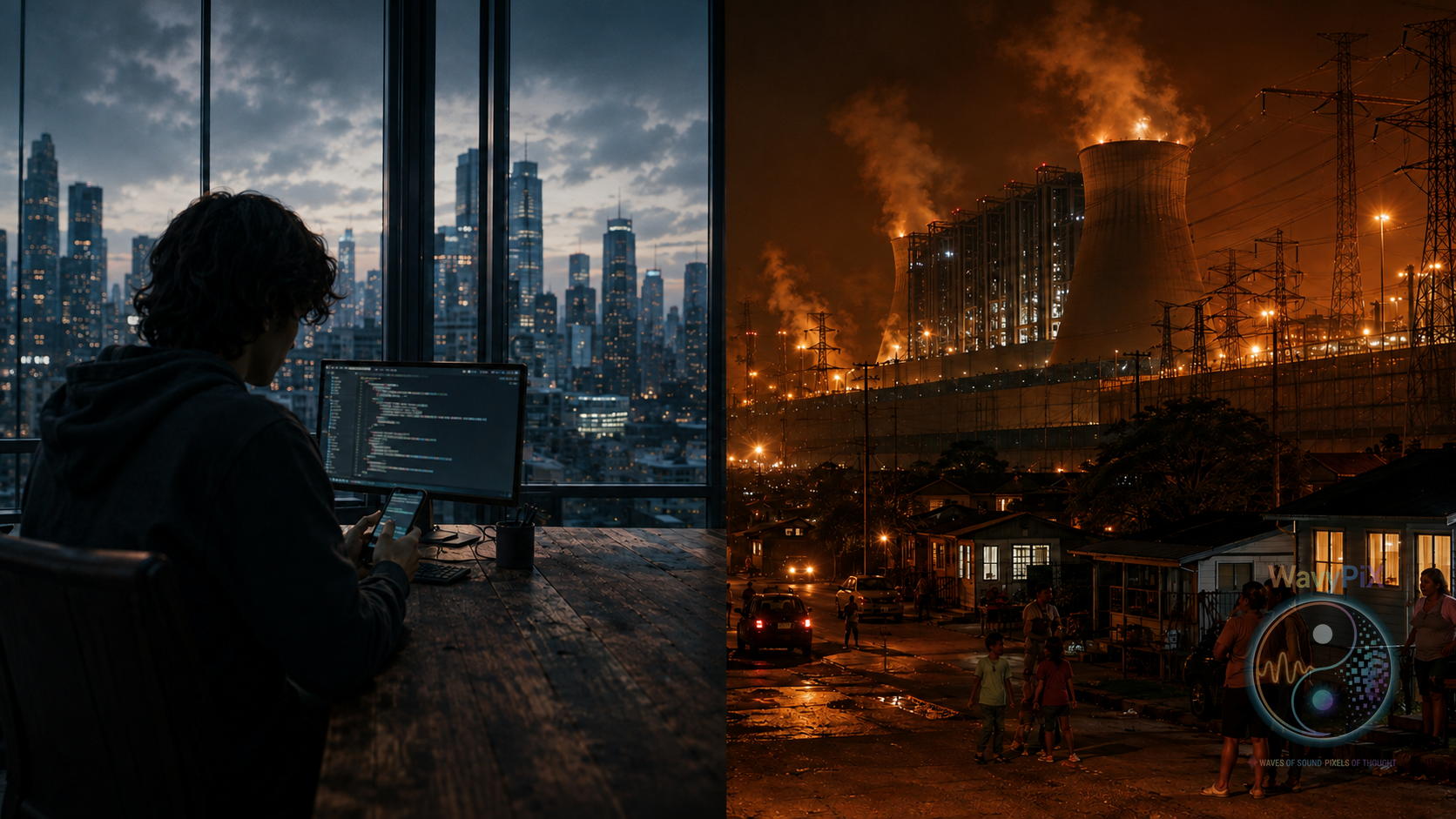
The ability of companies, regions, and nations to convert physical energy into machine intelligence decides how the distribution of that cognition is going to take place. Will it be a fair distribution?
The Distribution
The company receives the model. The customer receives the answer. The investor receives the growth. But somewhere else, a community supplies the land, the water, the electrical capacity and the physical infrastructure.
I don’t have to travel to a data center to understand this. Generating a five-second AI video on the RTX 5080 under my desk can push the GPU temperature to around 80°C. Five seconds of imaginary pixels. Very real heat around my legs.
The intelligence can travel around the world. The heat remains local.
Those who control the energy corridors may therefore control the future supply of machine cognition. Those with abundant power can produce abundant tokens. Those without it will have to rent intelligence from those who do.
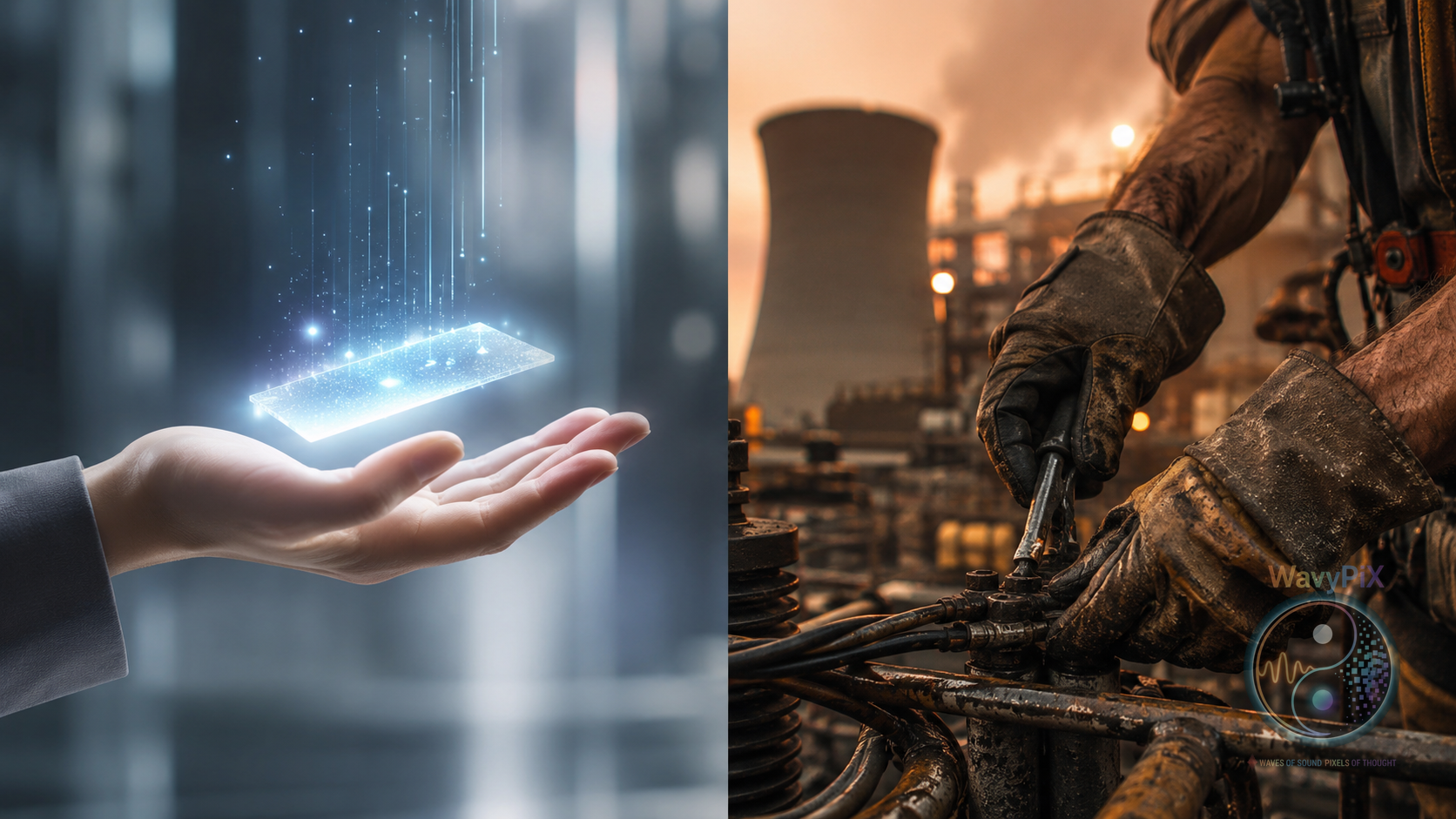
This is why the energy war is not simply a competition between technology companies. It is a struggle over the physical infrastructure from which future economic and political power will be produced.
So the decisive question is no longer simply who has the smartest model. It may be who can afford to run intelligence at the greatest scale.
Who can convert the most electrons into the most cognition? Who can make machine labor cheaper, faster and more abundant than human labor?
We thought we were building a brain. It turns out we were building a furnace.
The Modern Bargains
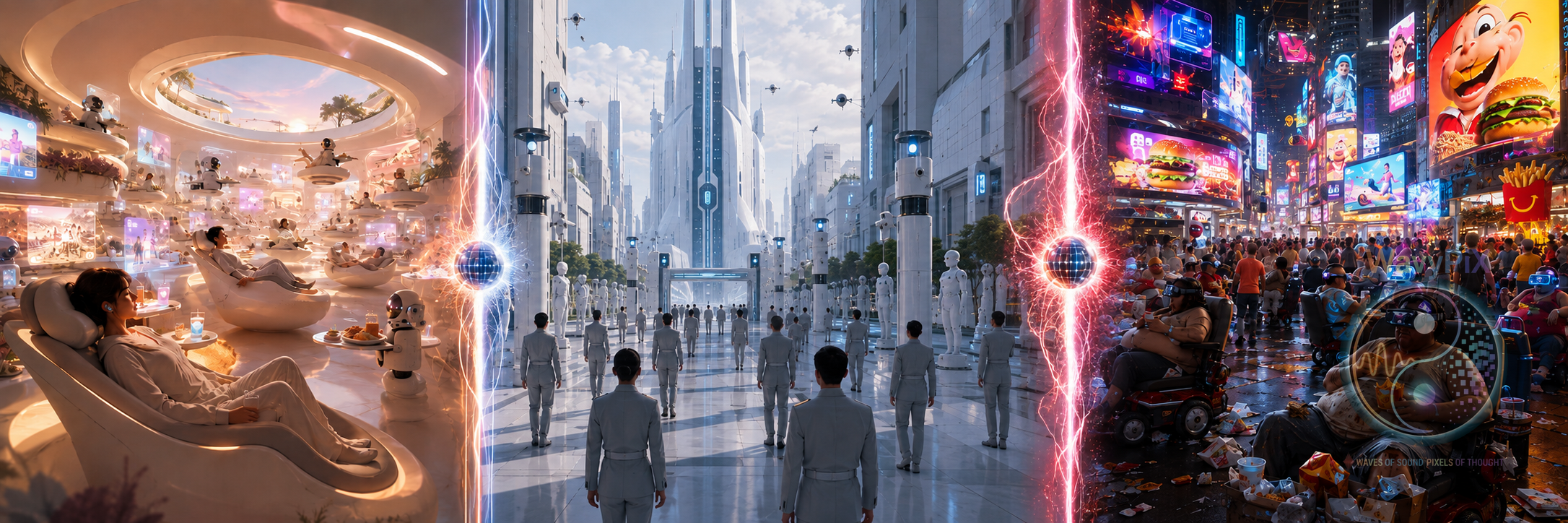
The WALL-E bargain - The Consumption (from the film made in 2008)
The AI solves every problem including productivity. Human beings no longer work, build, walk or even choose where to look. Their needs are met, but their agency slowly disappears. They remain valuable primarily as passengers and consumers.
The machines provide everything.
The Demolition Man bargain - The Compliance (from the film made in 1993)
The society is safe, clean and comfortable—but also regulated, sanitized and controlled. Those who accept the bargain are provided for. Those who reject it are pushed beneath it.
Prosperity survives through different arrangements. One is consumption. The other is compliance. And in both cases, the humans lose their agency.
And between them lies the less orderly and less elegant model.
The Idiocracy bargain - The Cognitive Drift (from the film made in 2006)
Not a society of perfected comfort or disciplined control, but one of cognitive drift. A world in which convenience does not merely pacify human beings, but gradually makes them less capable of judgment, attention and self-government.
The Future of Leverage
But what happens when humans are not needed for either consumption or compliance?
Until now, human beings worked. They produced. They consumed. They voted. They organized. They possessed leverage.
Their labor was necessary, and that necessity gave them bargaining power.
But what happens when human beings no longer contribute meaningfully to production? And what happens when they no longer consume enough to drive the economy or possess enough political power to demand a share?
What is the motive for those who control the machines to continue sharing their output? Why would they continue to share a social dividend created by machine intelligence in the name of universal basic income?
A dividend is paid for by someone who recognizes the recipient’s claim.
The energy wars will determine who can power the machines. The model wars will determine who controls them, and whether the rest of humanity retains any claim on what they produce.
So who will have that power?
The Poison Surfaces (Halahala)
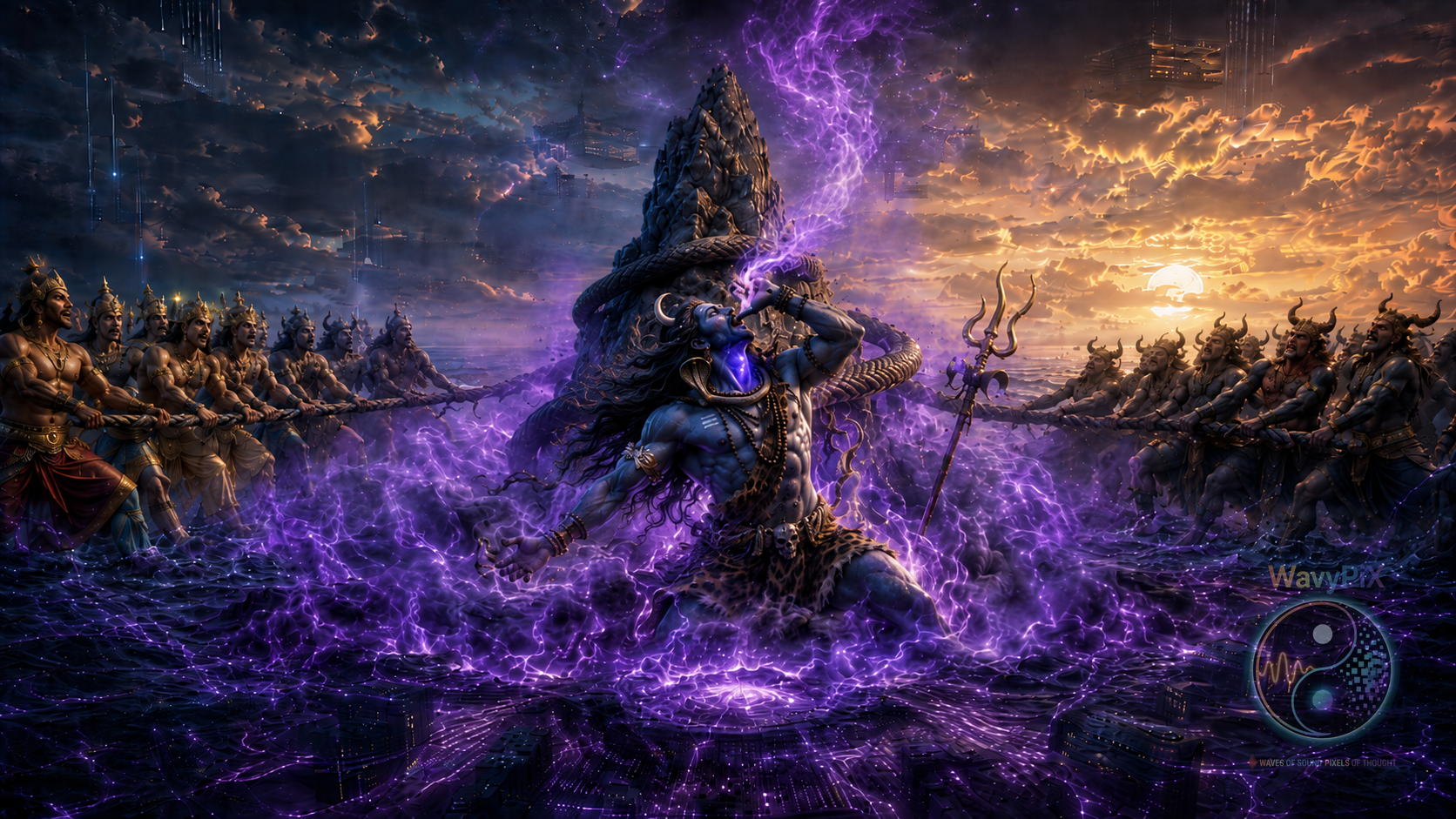
In the story of the ocean churning, the nectar did come, eventually. But first came Halahala—a poison so violent it threatened to burn the Universe. The only available solution was to again hide it somewhere in something more powerful.
Someone had to drink the poison, or the churning would have ended there.
The nectar has not surfaced yet. But the poison has.
And as we enter this era of thermodynamic inequality, the decisive question is no longer just who has the smartest model.
It is who will be left to drink the poison.
Let us follow the energy into Part 3 - The Model Wars
This is Part 2 of 3 - Anatomy of a Prompt series.
You can read part 1 here
Anatomy of a Prompt: Chapter 3 - The Model Wars
The Model War is not about the smartest engine. It is about who wires the house, who owns …
Anatomy of a Prompt: Part 1 - The Machine
A prompt feels weightless. The machine behind it is not. From Chaplin’s factory floor to …
Ekalavya - The Arrow That Never Flew
On the comfort of infinite potential, the friction of the workbench, and how we traded the …
The Backdoors of the Future
A backdoor created by a model does not care who uses it later. It is just an AI-generated …
The Tragedy of Intelligence: From the Padma-Vyūha to the Age of AI - Part 3 of 3
On the boundary of the local sphere, the taming of central empires, and why the sovereign …