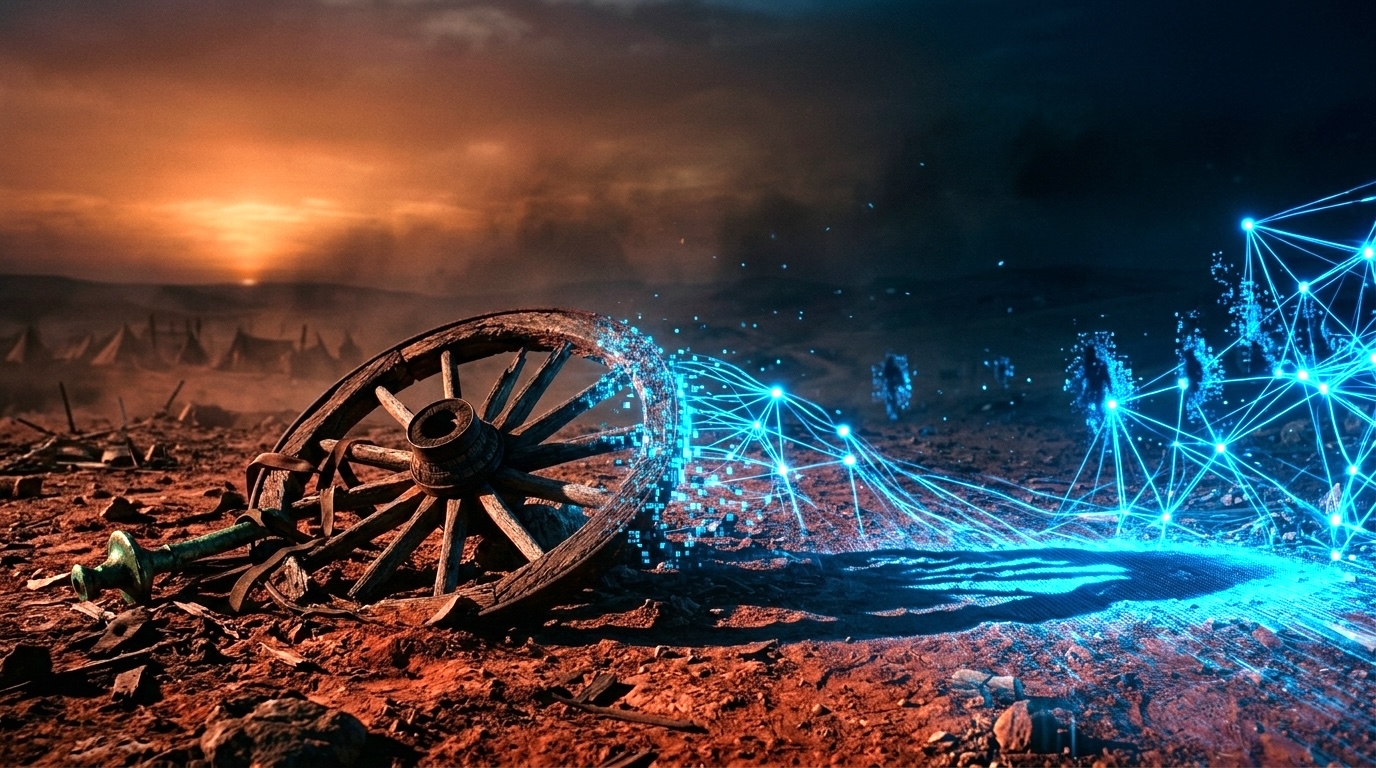
“The self-luminous consciousness shines within the heart; when the mind turns outward, it perceives the world of names and forms, but when it turns inward, it rests in its own nature.” — Chandogya Upanishad (8.6.6)
*This is the third installment of a three-part narrative. If you have not yet entered the maze or seen the formation, start with Part One: The Wound and Part Two: The Formation
Don’t have the time to read the entire article? You can listen to it here.
PART THREE: THE MIRROR
The righteous side still lost ground.
Not because it lacked morality. But because the other side had designed a more effective system.
Righteousness is not a Return Pointer.
Krishna knew.
He understood the incompleteness of Abhimanyu’s knowledge before the boy entered. He saw the structure of the thirteenth day before it unfolded. And he allowed it. Not out of cruelty. But because the larger arc justified the cost.
The people holding the complete map rarely pay the price of incomplete systems. The people inside them do.
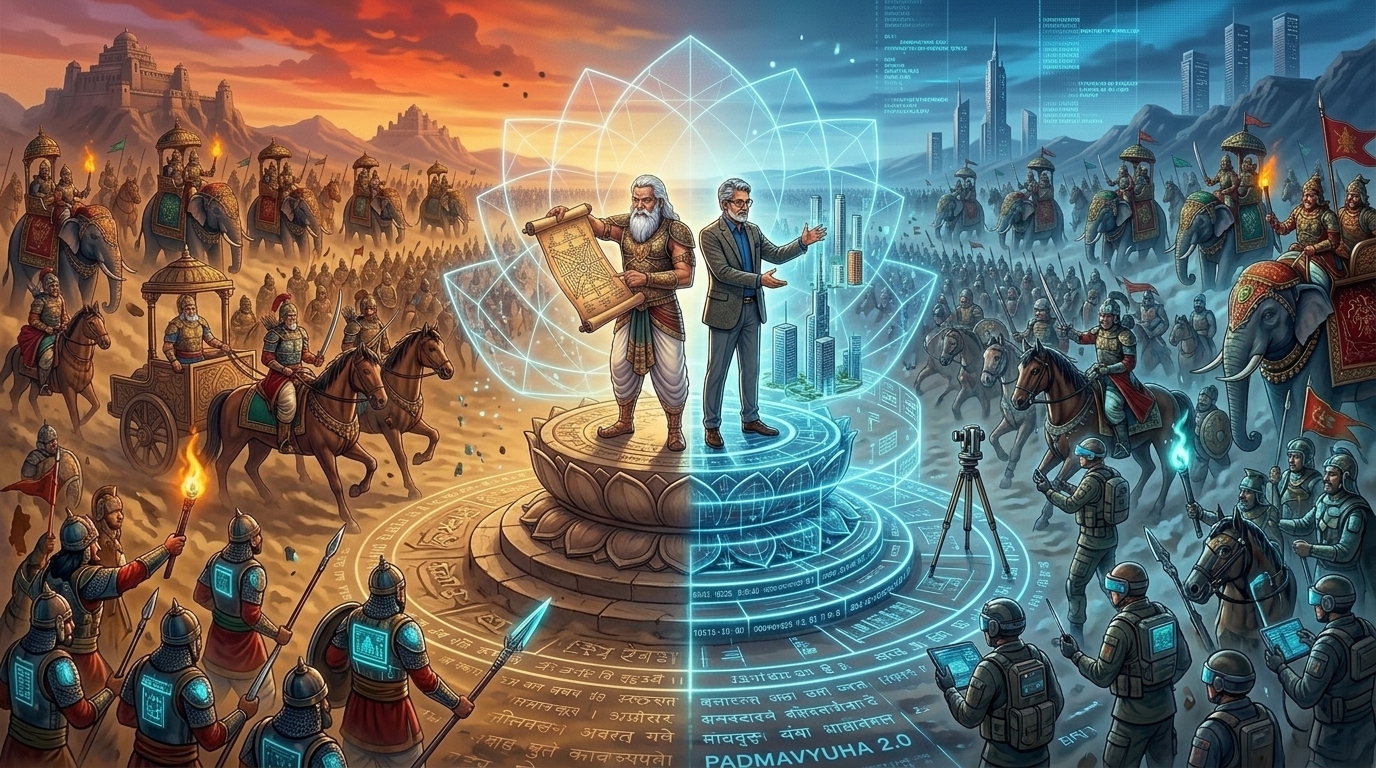
The formation keeps changing form.
Platforms. Networks. Clouds. Feeds. Systems that feel like tools until they become environments. The shift is always gradual. Convenience. Dependence. Invisibility. Then structure.
Picture someone sitting with their phone at 11pm, typing a question about a symptom they are frightened to mention to anyone they know. They are not thinking about architecture. They are thinking about the thing worrying them. What they were not told — what the architect understood and the user did not — is that everything flowing outward is flowing into a formation whose internal logic they cannot see, whose door only opens from one side.

This is the Pandava position in 2026. Righteous. Well-intentioned. Carrying a map handed to them incomplete — by people who did not know the lesson was unfinished, or who knew and made their calculation about the larger arc.
What matters is not intelligence. It is visibility. One side sees the system. The other sees only its interface.
The Pandavas won the kingdom and inherited what remained.
Draupadi, the wife of Pandavas lost all her sons.
Gandhari, the mother of Kauravas lost her lineage.
Yudhishthira ruled in grief — the most righteous man in the epic reduced to wearing a crown that felt like a weight.
The victory was structurally complete and emotionally empty.
Then came Parikshit. Abhimanyu’s son. Born into a world shaped by decisions he did not participate in. Inheriting a throne in a kingdom that had spent itself completely on the decisions of the generation before him.
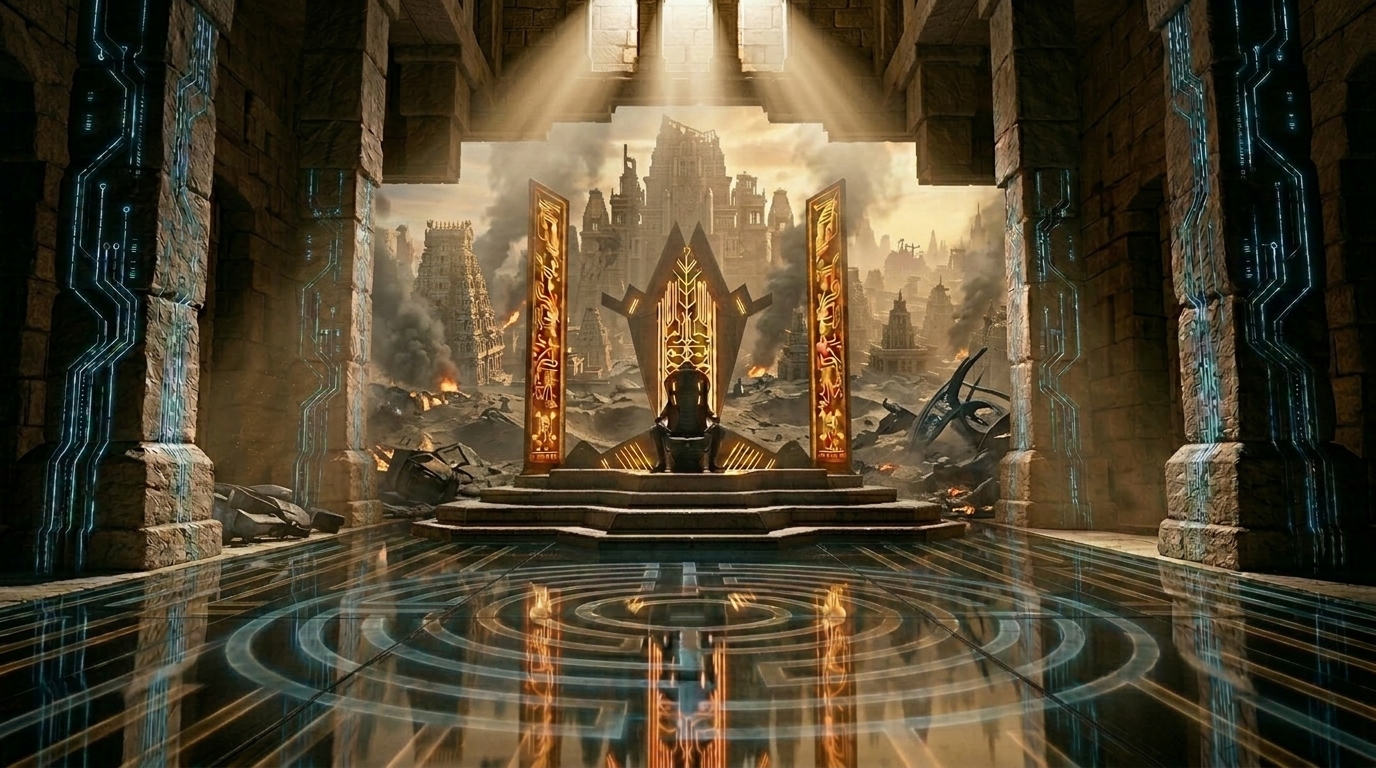
Every generation inherits a formation it did not design. The teenagers growing up today did not invent infinite scroll. They did not architect algorithmic validation loops. They did not sign the terms of service agreements that quietly surrendered their privacy in exchange for connection. They are modern Parikshits — handed the map of a world shaped by choices made before they arrived, discovering only gradually that the exits were walled off before they were born.
The answer is not retreat. It is architecture.
Intelligence that lives where the person lives — on the device in your pocket, processing the 11pm fear locally, forgetting locally. This local sovereign agent does not reject the cloud; it tames it. It strips the data of its vulnerability, holds the sensitive context close, and uses the vast compute of the cloud merely as an un-networked utility to enrich the experience. The cloud becomes a tool you employ, not a formation that swallows you.
Because a tile that holds its own intelligence answers to no single hub. It can venture into the cloud for scale, but it always returns home to its own center.
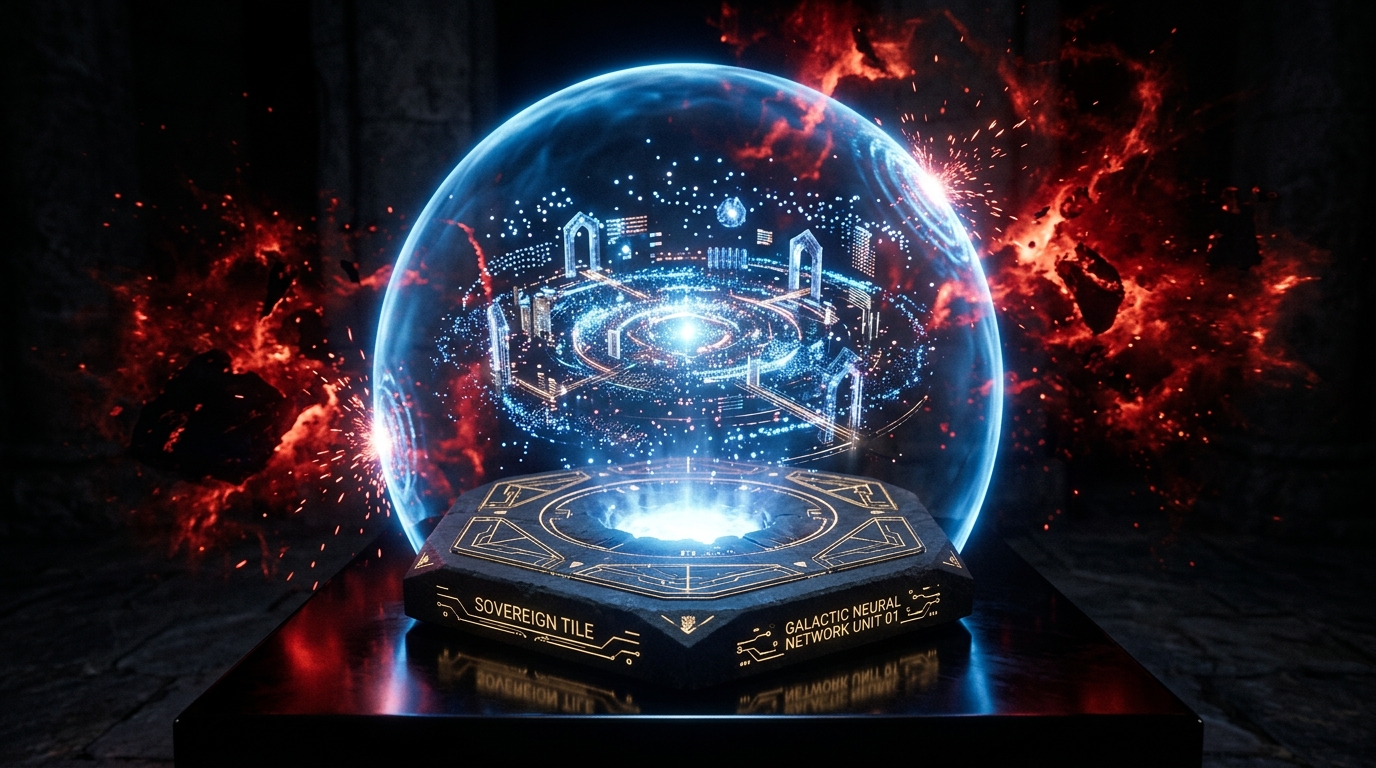
That tile is sovereign in a way that no terms of service can revoke.
The Padmavyuha’s warriors were not individually extraordinary. The formation was designed so that ordinary tiles, holding their position, were enough. That is the design standard worth building toward.
Not the brilliant centralized system that processes everything and knows everything and eventually offers a single surface for someone to strike. But the formation where each person’s data, each person’s context, each person’s 11pm fear lives where it was generated — close, sovereign, and beyond the reach of any formation that was not invited in.
EPILOGUE
In 1945, in the New Mexico desert, J. Robert Oppenheimer witnessed the first atomic test. Later he recalled a verse from the Bhagavad Gita:
“Now I am become Death, the destroyer of worlds.”
Is that a revelation or recognition of systems exceeding the moral scale of their makers?
Every formation begins as clarity. Then becomes capability. Then becomes structure. Then forgets what it was.
Truth is destroyed the moment it is captured by systems of belief and authority. What begins as inquiry hardens into structure. What hardens into structure eventually ceases to be inquiry at all.
The question is not whether such systems will continue to emerge. They will.
The question is whether anyone inside them still knows where the exit is. Or whether the exit itself must now be rebuilt inside a system that has forgotten it was ever needed.
The Bhagavad Gita does not end with resolution. It ends with continuation — action without attachment, motion without certainty.
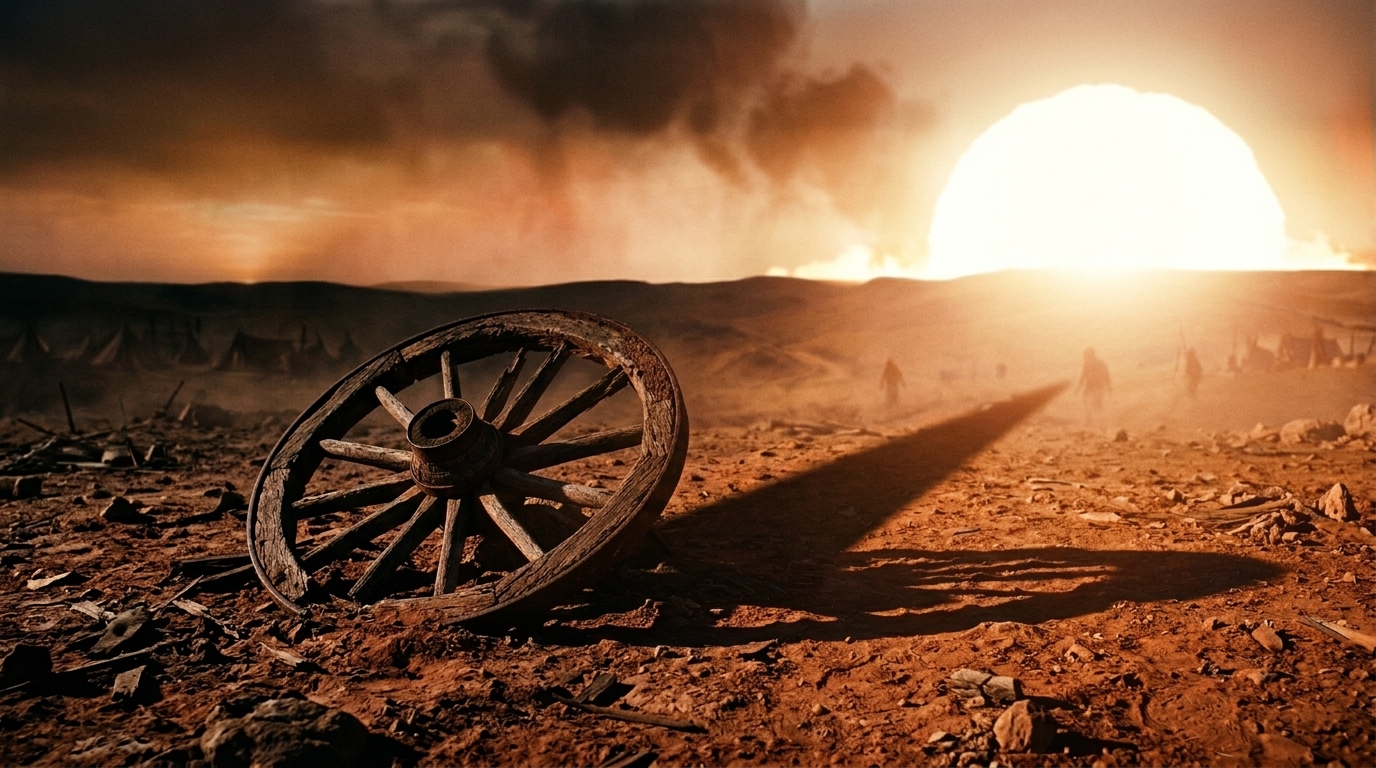
The Kalachakra, the Wheel of Time, does not pause for its passengers.
What remains, after everything, is still the image of a boy moving deeper into a system that does not offer return. Not weak. Not foolish. Not unworthy. Simply incomplete inside a structure that requires completion to exit.
And still moving forward.
Because the alternative is not escape.
It is disappearance inside a decision already made.
“The formation has always been the answer. What changes, in every era, is only whether the architects loved the people inside it enough to build them a way back out.”
This is Part Three of a three-part exploration into systems, survival, and sovereignty.
Read Part I - The Wound and Read Part II - The Formation
Follow me at https://WavyPix.com https://wavypix.substack.com/