Don’t have the time to read the entire article? You can listen to it here.
The Feeding Machine: Measuring the Cost of Cognition
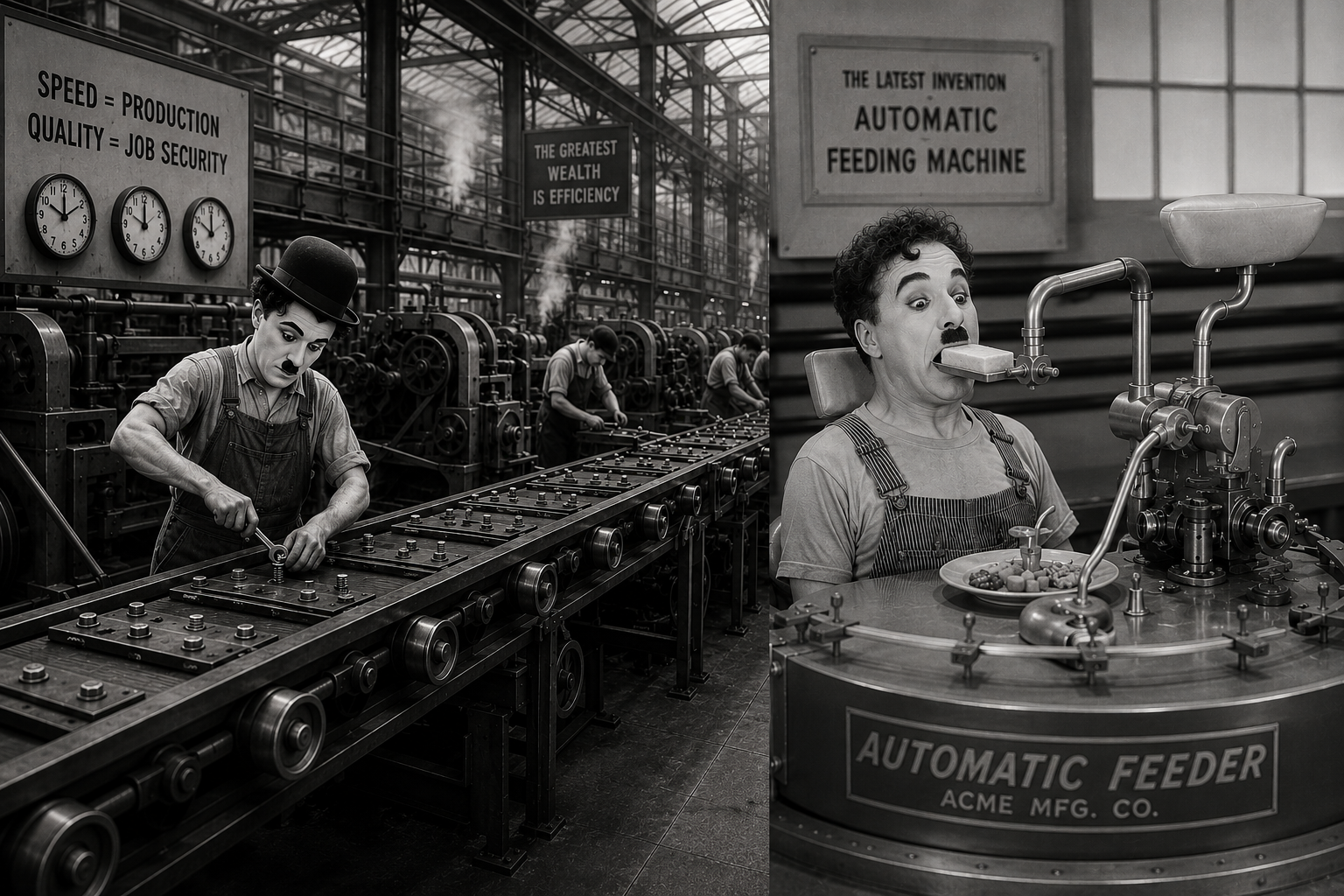
In the film Modern Times from 1936, Charlie Chaplin stands on the production floor of a factory.
Bolt after bolt passes in front of him on a conveyor belt.
He tightens one. Then another and another. They keep coming, never stopping.
Then they keep coming.. faster.. faster.. faster. Never stopping.
The automation is perfect. The only inefficient ‘cog in the wheel’ is the human.
All those bathroom breaks, the lunch breaks, the time to chew the food-one mouthful at a time, and then what’s that last thing - the time for a break to give some rest to the human body to relax?
Come on, give us a break! To the “Factory” that’s a total loss of productivity.
So the management brings in the latest innovation.
An automated feeding machine. So the worker can continue working while eating.
Marvelous innovation.
And the scene turns into a hilarious spectacle as the machine breaks down, making Charlie Chaplin the victim in a funny way.

The audience laughs.
We laugh because the machine looks ridiculous and the plight of Chaplin the common man is hilarious.
The factory owner on the other hand was not trying to create comedy.
And the story is not really about the machine.
It is about the measurement. It is about improving the spreadsheet.
It is about the Return On Investment (ROI).
Measurement of Productivity
The Industrial Revolution measured:
Bolts.
Movements.
Seconds.
Factory throughput.
Today, we measure something different:
Tokens.
Latency.
Inference.
Context.
Machine cognition.
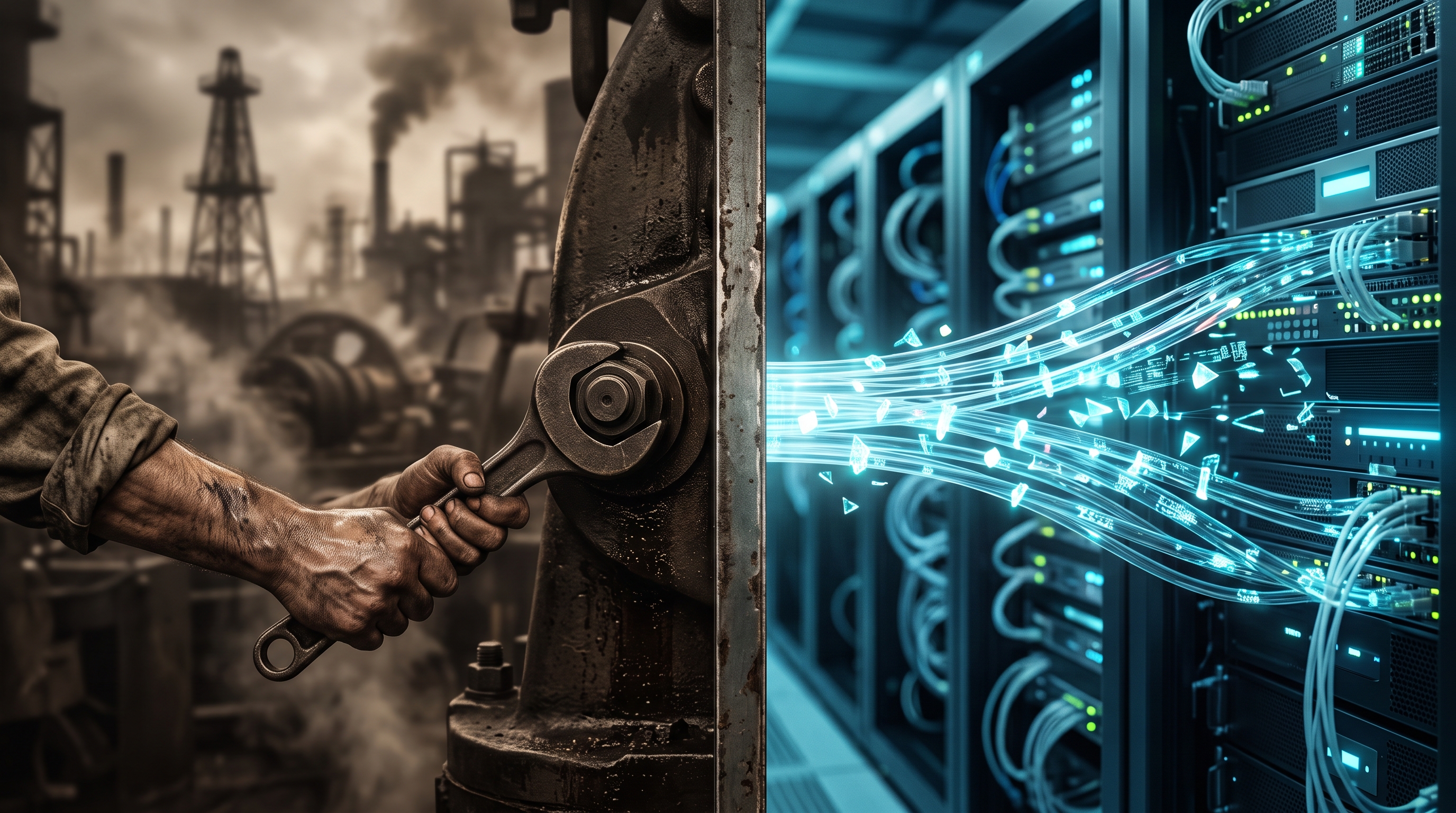
With or without the conveyor belt, the underlying accounting remains the same.
The Journey of One Innocent Prompt
A user sits in front of a screen and casually types: “Google, get me a report on…”
It is a simple request. It lightens the cognitive load of the user.
One innocent prompt.
But that prompt puts a cascade of events into motion.
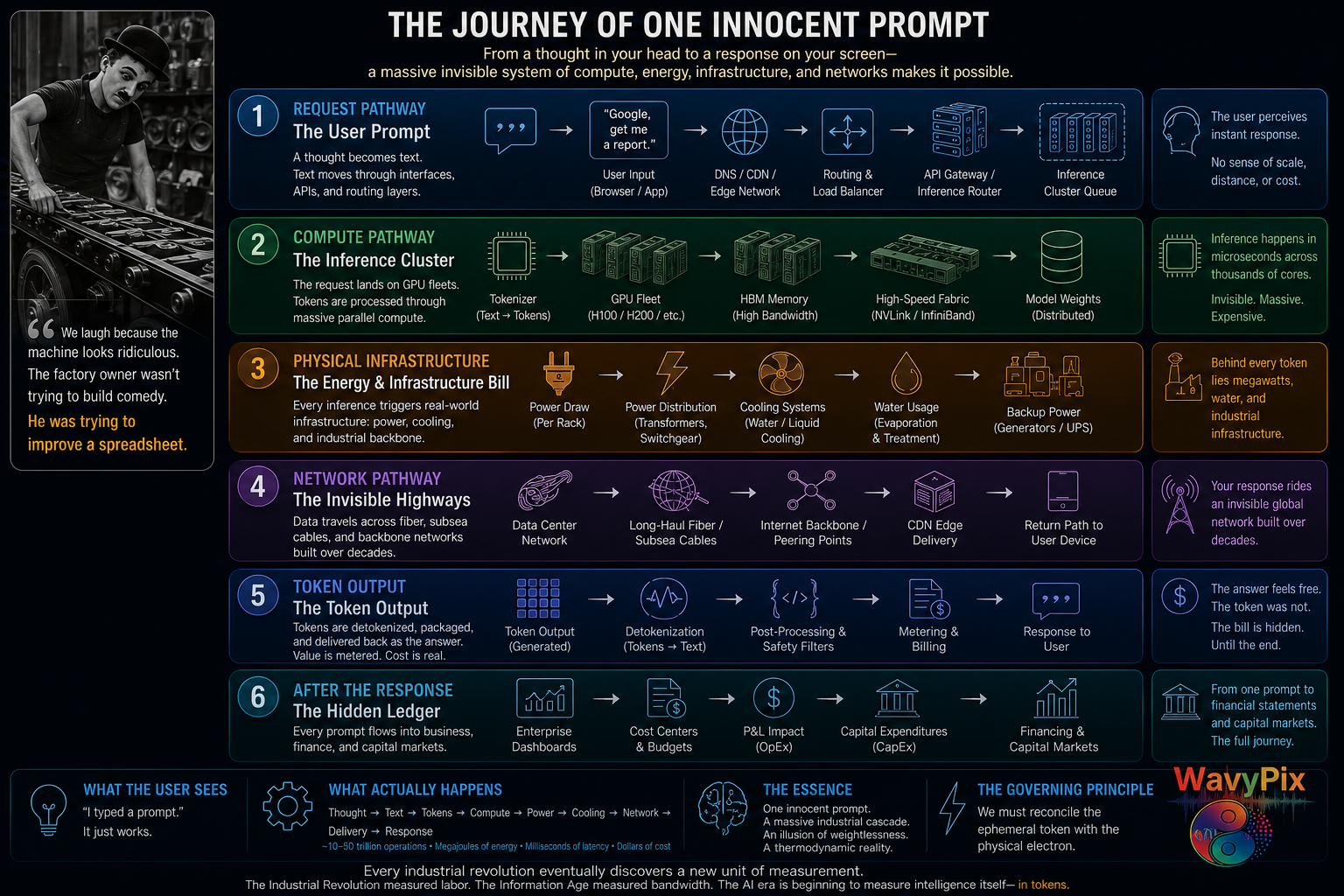
A prompt may appear weightless to the user, but underneath it draws upon a multilayer industrial system of networking, computation, cooling, electrical infrastructure and metered inference before returning a response.
Behind the service are:
Thousands of GPUs.
Megawatts of electrical capacity.
Cooling towers.
Transformers.
Transmission lines.
Data centers costing millions—and increasingly billions—of dollars.
And all the raw material that is needed to support this promising future.
Not all of that machinery awakens exclusively for one question.
While a single prompt consumes only a tiny fraction of the system, the entire system had to be built, powered and kept ready so that one question could be answered almost instantly and effectively.
The prompt does not send a miner into the earth at the moment it is typed. But it inherits the physical history of the machine answering it:
The minerals extracted from the ground.
The chips fabricated in specialized factories.
The servers transported into data centers.
The electricity generated and transmitted to them.
The heat dissipated away during the entire time.
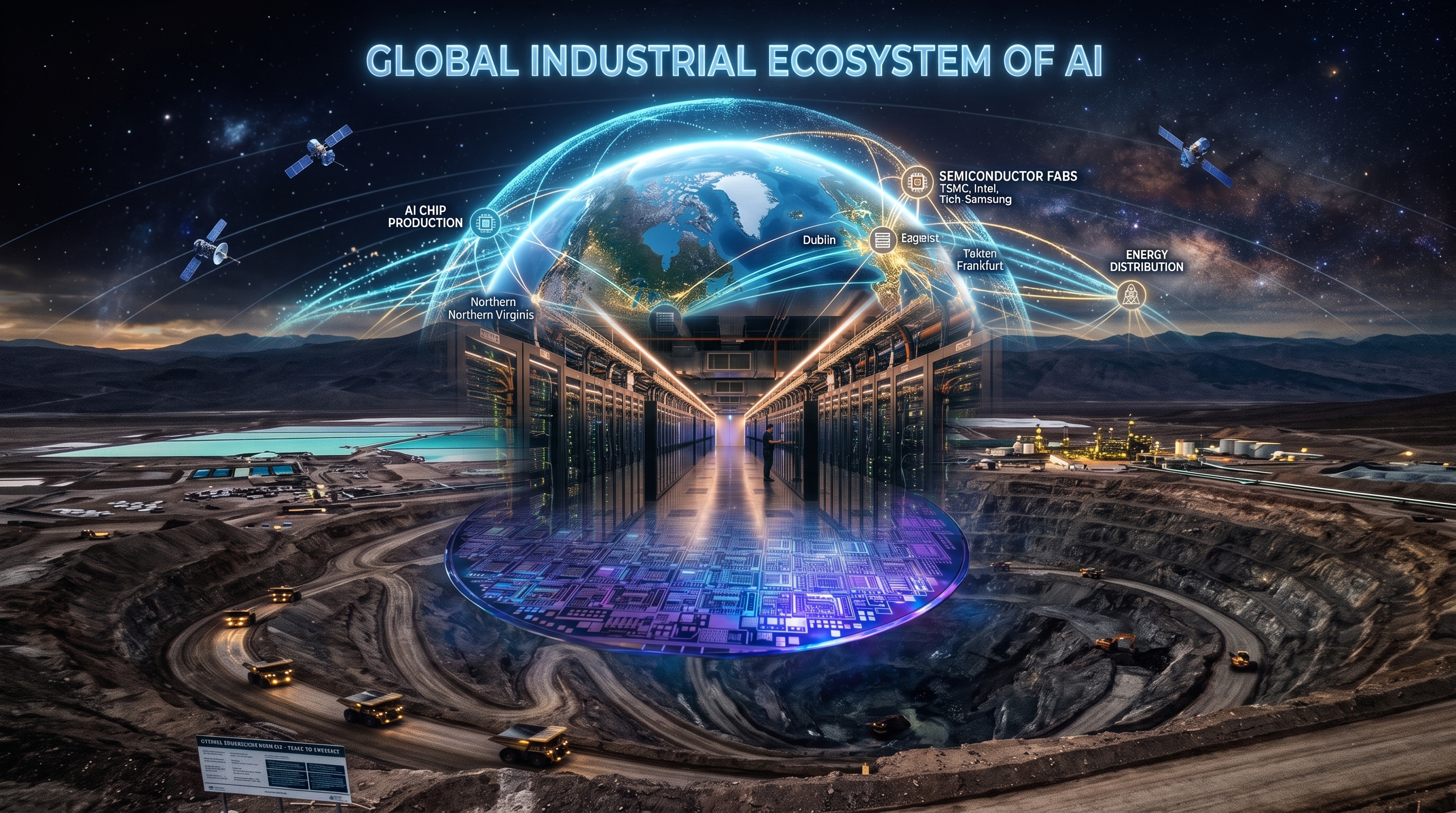
One prompt appears innocent. but … Behind it stands an entire industrial ecosystem that spans the entire globe and even into the space.
And that ecosystem is not free.
The Price of the Answer
Today, the leading frontier-model companies sell access to machine intelligence by the token.
At current published prices, leading American frontier APIs charge roughly a few dollars per million input tokens and around twelve to thirty dollars per million output tokens, depending on the model, context and service tier.
That does not tell us what the token actually costs the provider.
The companies do not disclose the complete marginal cost of serving each model. Efficiently utilized infrastructure may allow the price of a paid request to cover the immediate cost of producing its answer.
But the cost of answering one prompt is not the same as the cost of building the system capable of answering billions of prompts.
The price of the token must ultimately sit against a much larger ledger:
Research.
Model training.
Specialized chips.
Reserved computing capacity.
Data-center construction.
Networking.
Cooling.
Power generation.
Free and subsidized users.
Building the next generation infrastructure with the expectation of meeting the future demands.
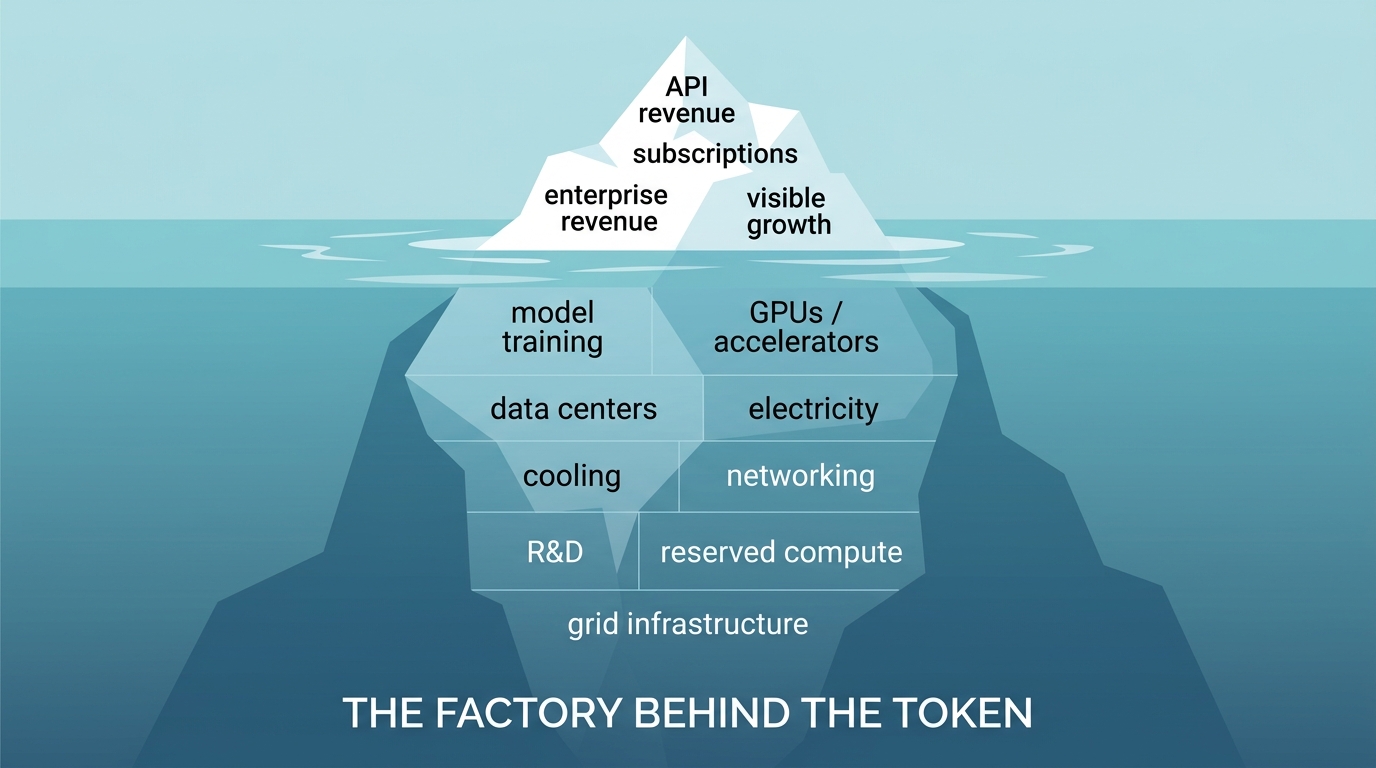
By some industry financial estimates, for every dollar of software revenue frontier labs generate, as much as $1.50 to $1.60 is recycled back into infrastructure, compute capacity, and model training. The math relies heavily on outside capital—debt facilities or cash reserves—rather than current operating earnings.
So may be every prompt is not losing money. May be the immediate answer is paid for in certain cases.
But when will it repay for the factory being built to produce the next trillion answers.
And no one yet knows whether the coming volume of machine cognition will repay everything being constructed in its name.
The New Unit of Measurement
The Industrial Revolution measured labor.
The Information Age measured bandwidth.
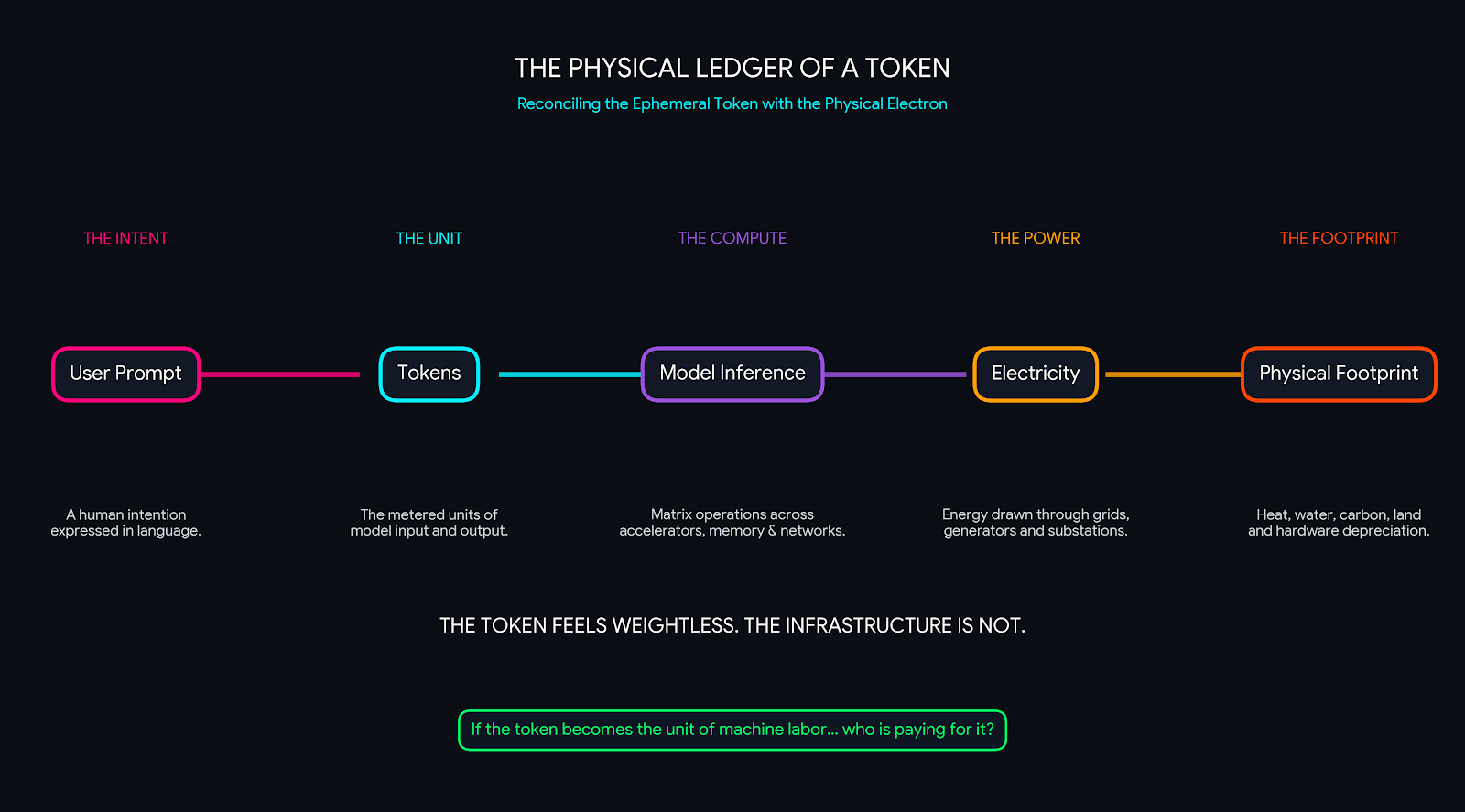
The AI era is beginning to measure intelligence.
Its unit…is the token.
Every token consumes computation.
Every computation consumes electricity.
Every electrical event leaves a physical footprint.
The token feels weightless.
The infrastructure is not.
And so we return to the central contradiction of the AI era:
We must reconcile the ephemeral token with the physical electron.
If the token becomes the unit of machine labor…
Who is paying for it?
No balance sheet has answered that question yet.
Maybe an older ledger already has.
The Cosmic Churning (Samudra Manthan)
In the ancient Indian mythological story of Samudra Manthan, the Devas and the Asuras wanted the same impossible prize Amrita, the nectar of immortality.
They agreed to cooperate with each other not because they had reconciled but because neither side could churn the cosmic ocean on their own.
That’s where the Amrita was. Deep under the water.
They placed Mount Mandara at the center of the ocean, wound the serpent Vasuki around it like a rope, and pulled from opposite ends.
Back and forth.
Again and again.
The entire ocean turned beneath them.
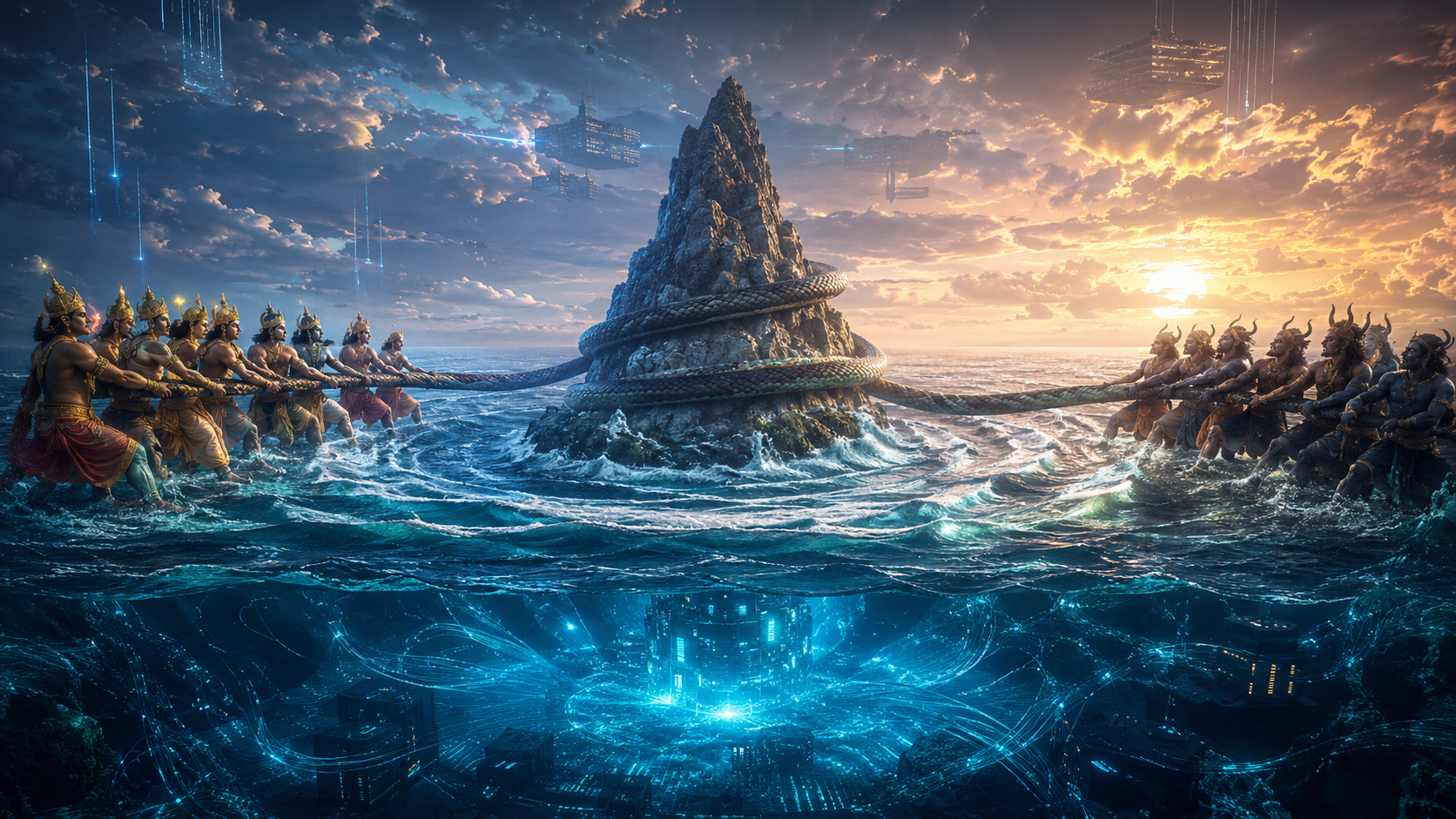
The AI economy has begun a similar churning.
No one agrees on who should control it.
Everyone agrees only that the churning must continue.
And beneath it lies the promised nectar.
The prompt feels weightless. The token feels cheap. The promise of the nectar is everywhere.
But every churning has a hidden cost.
We have begun to churn the ocean.
But the churnings do not surrender their treasures without first disturbing everything buried beneath them.
We are still waiting to see what rises first.
Let us follow the ledger into Part 2: The Energy Wars: Chinatown in the Cloud.
This is Part 1 of 3 - Anatomy of a Prompt published originally at https://wavypix.com
Anatomy of a Prompt: Chapter 3 - The Model Wars
The Model War is not about the smartest engine. It is about who wires the house, who owns …
Anatomy of a Prompt: Part 2 - The Bargain
The intelligence travels. The heat stays local. Part 2 follows the energy wars behind …
Ekalavya - The Arrow That Never Flew
On the comfort of infinite potential, the friction of the workbench, and how we traded the …
The Backdoors of the Future
A backdoor created by a model does not care who uses it later. It is just an AI-generated …
The Tragedy of Intelligence: From the Padma-Vyūha to the Age of AI - Part 3 of 3
On the boundary of the local sphere, the taming of central empires, and why the sovereign …