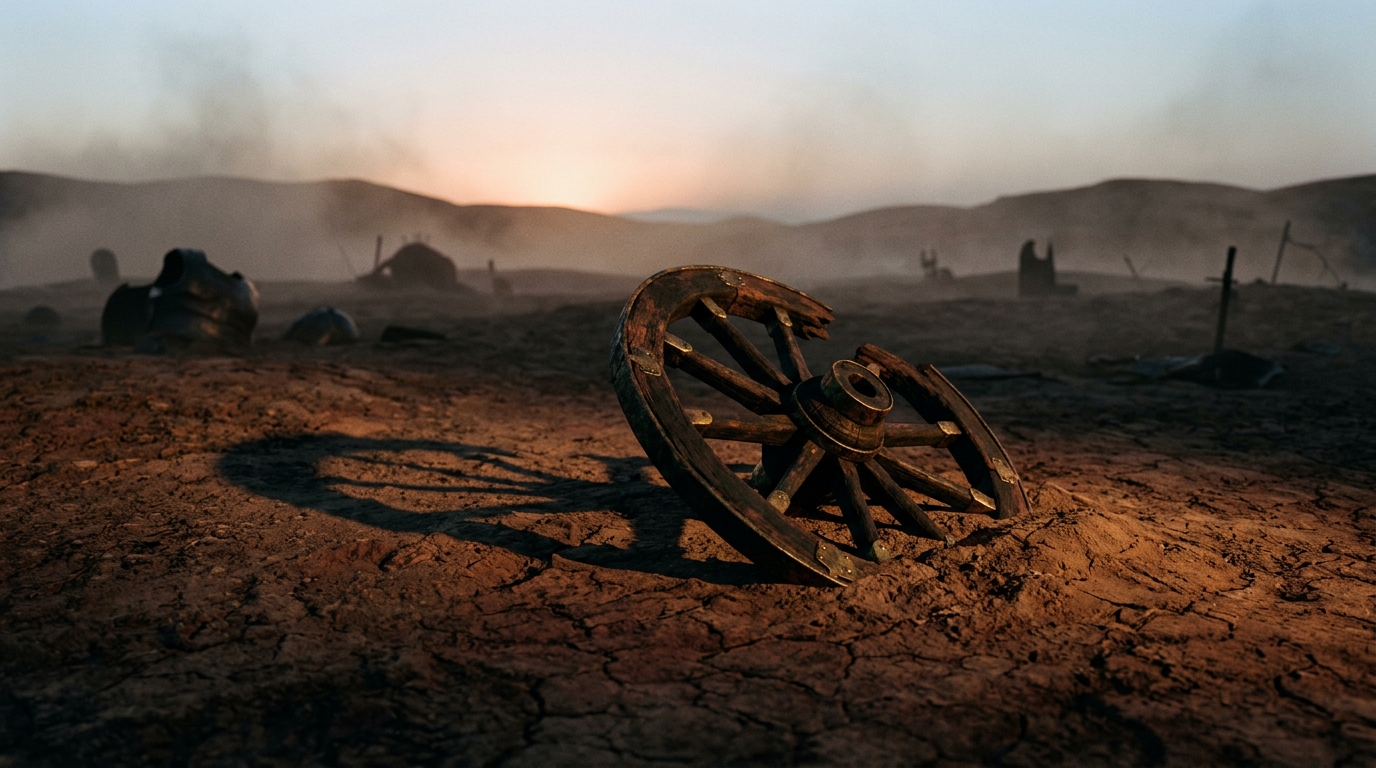
“You have a right to action alone, never to its fruits. Let not the fruits of action be your motive, nor let your attachment be to inaction.”
— Bhagavad Gita
Don’t have the time to read the entire article? You can listen to it here.
PART ONE: THE WOUND
Imagine entering a maze not knowing you cannot leave.
Not because you are weak. Not because you lack courage. But because the map you were given was incomplete before you ever touched the door. And because someone designed the maze to close behind you.
This is where Abhimanyu found himself on the thirteenth day of the Kurukshetra War.
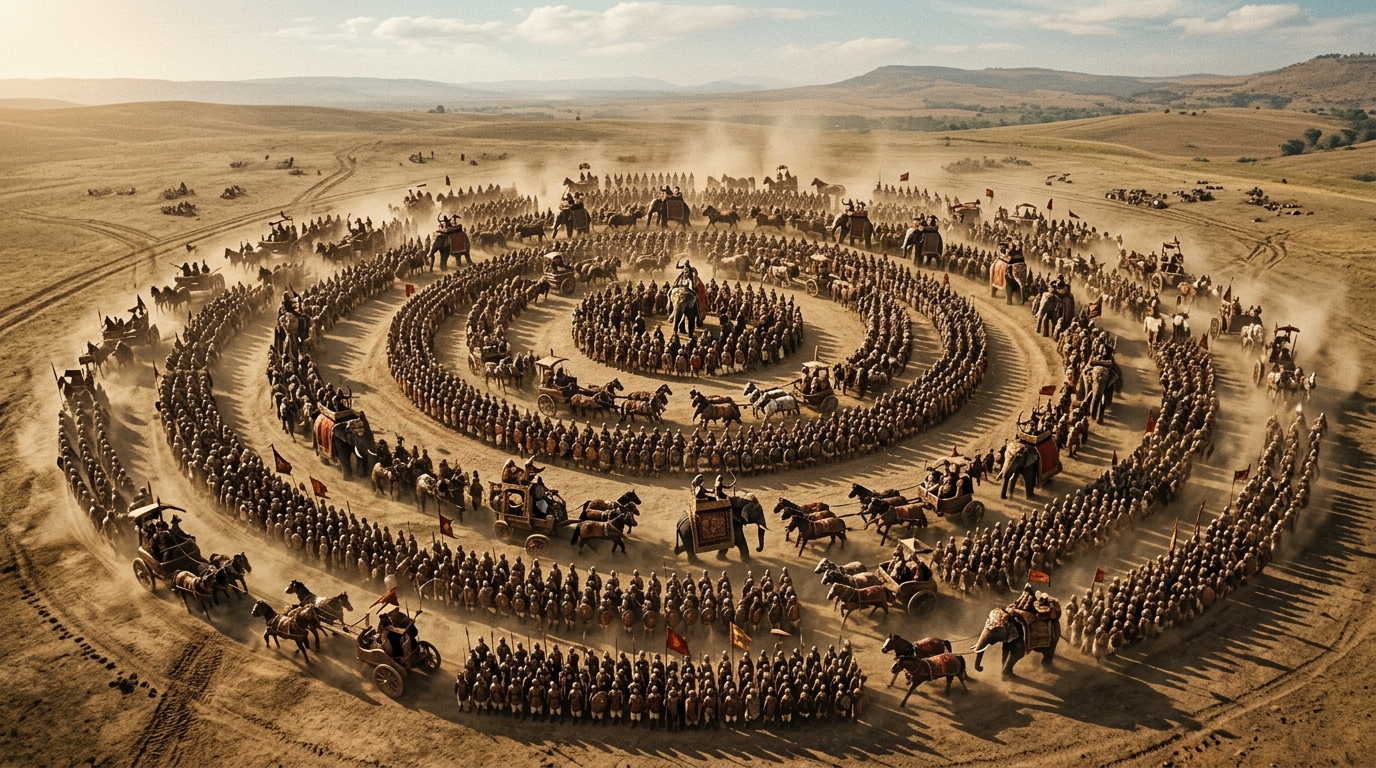
Sixteen years old. Son of Arjuna. Brilliant enough to enter the Padmavyuha — the rotating lotus formation designed by Dronacharya. And unable to get out.
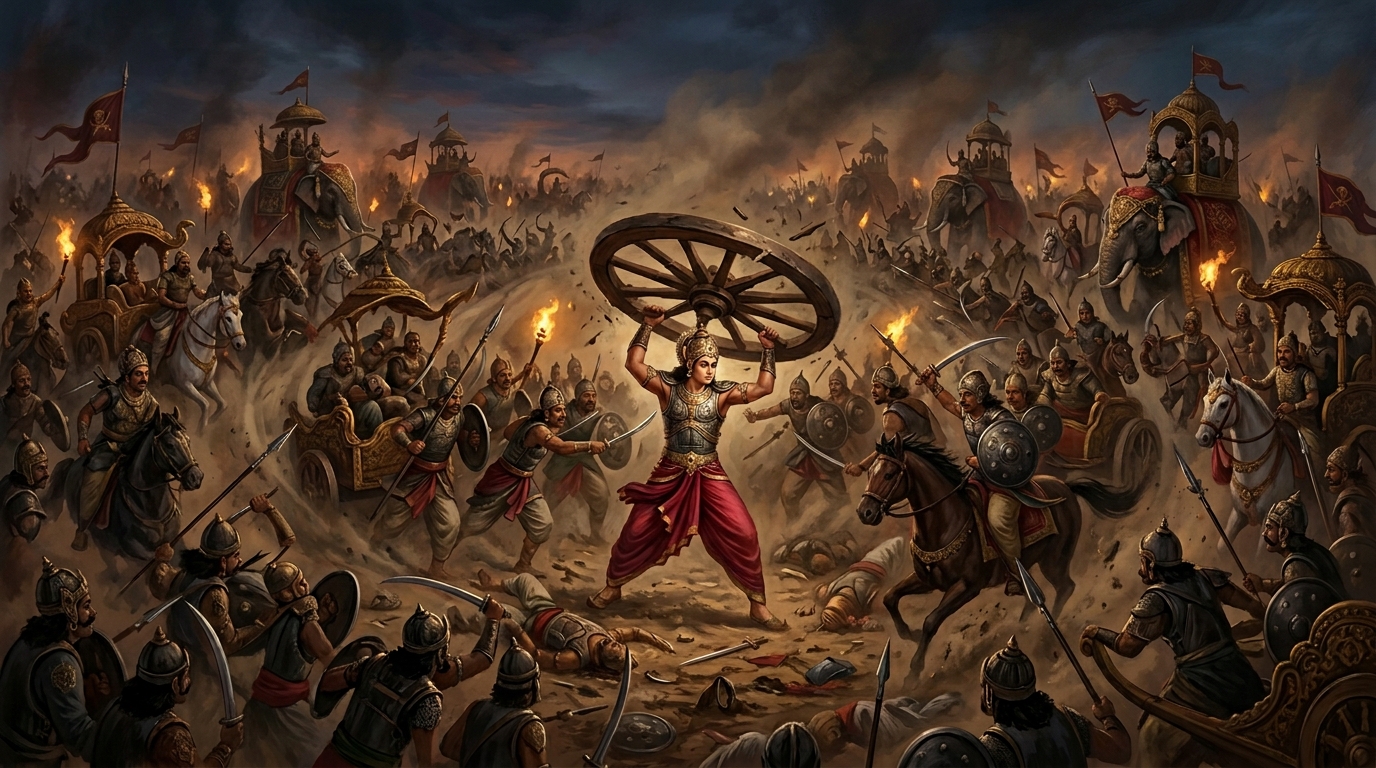
The tragedy of Abhimanyu is usually told as heroism.
It is something more precise. It is the difference between wars of choice and wars of necessity. The Kauravas chose the war. The Pandavas inherited it.
“You can choose to enter a war, but once it has begun you cannot choose to leave it when you wish."
— Winston Churchill
The Padmavyuha was not a battlefield tactic. It was a system. Concentric rings rotated in opposing directions. Each breach sealed behind the intruder. Every opening became closure. The formation adapted faster than the person inside it.
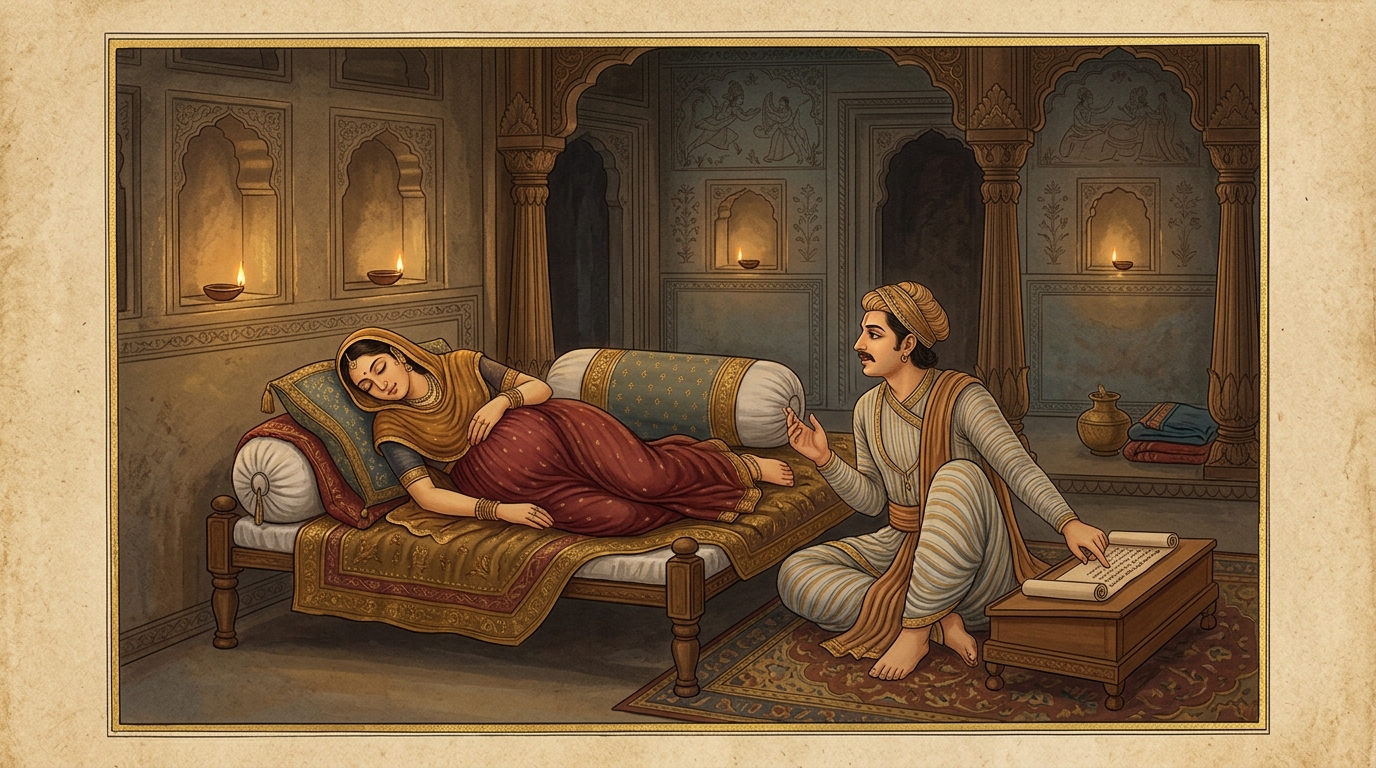
Abhimanyu knew how to enter because he heard his father Arjuna describe it while still in his mother’s womb. But Subhadra fell asleep before the exit was explained. The lesson ended without anyone knowing it had ended.
This is the Kryptonite origin. The gift and the wound sharing a single source. The very channel that gave him knowledge beyond any warrior his age is the channel that closed one lesson too soon.
He entered carrying half a map into a system built by those holding the rest. Not out of ambition. But because the battle required him. Arjuna had been drawn away. The formation was collapsing. There was no one else.
Some actions are chosen. Others are absorbed by necessity. The difference is the difference between designing a battlefield and inheriting one already in motion.
The side that chooses the war optimizes for capability. The side forced to survive it optimizes for resilience. Most systems — political, military, technological — are built by the first kind. And lived inside by the second.
“You have power over your mind — not outside events." — Marcus Aurelius
This is Part One of a three-part exploration into systems, survival, and sovereignty. Read Part Two: The Formation on wavypix.com.