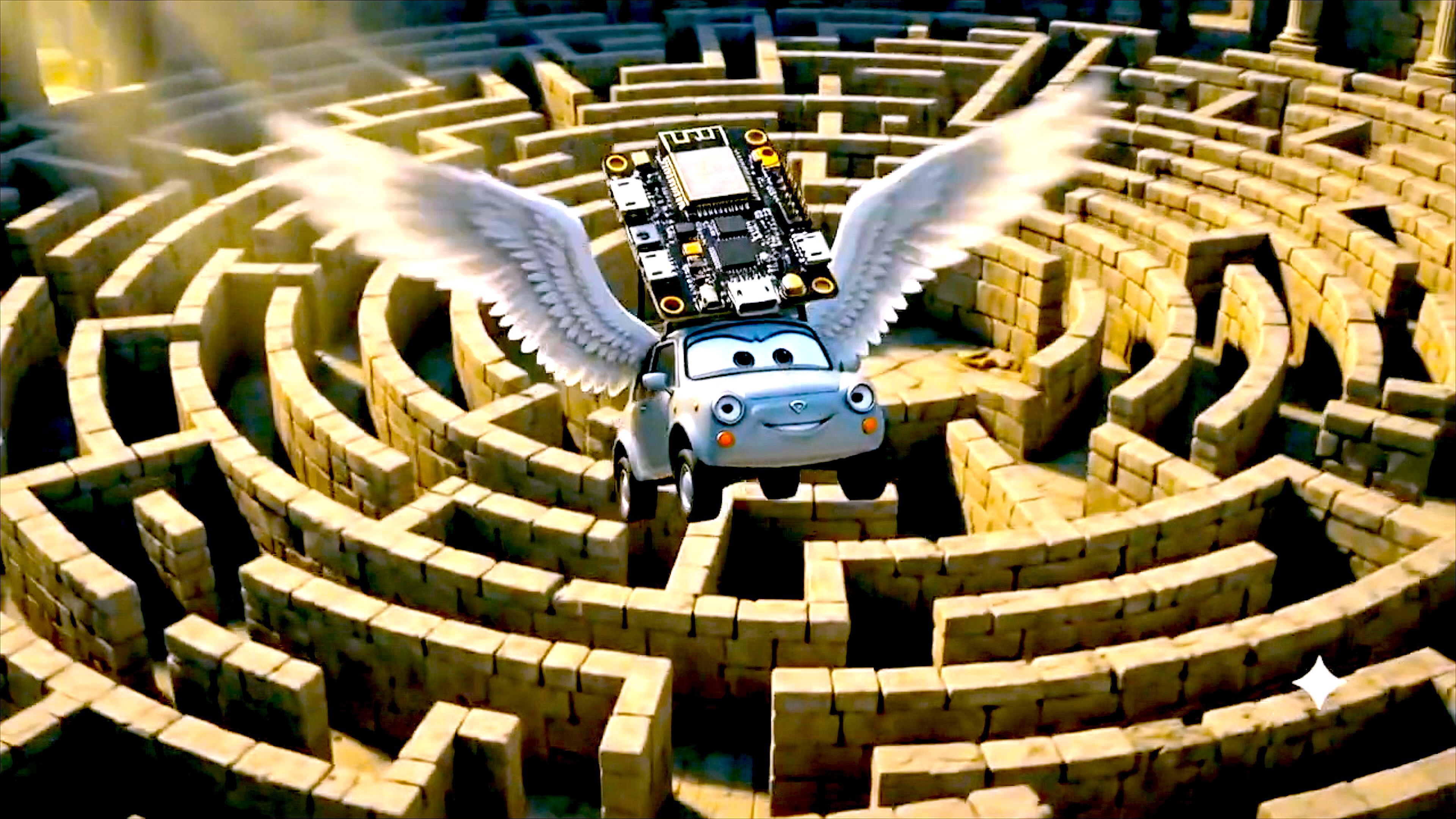
The Exit - The Concluding Part
Don’t have the time to read the entire article? You can listen to it here.
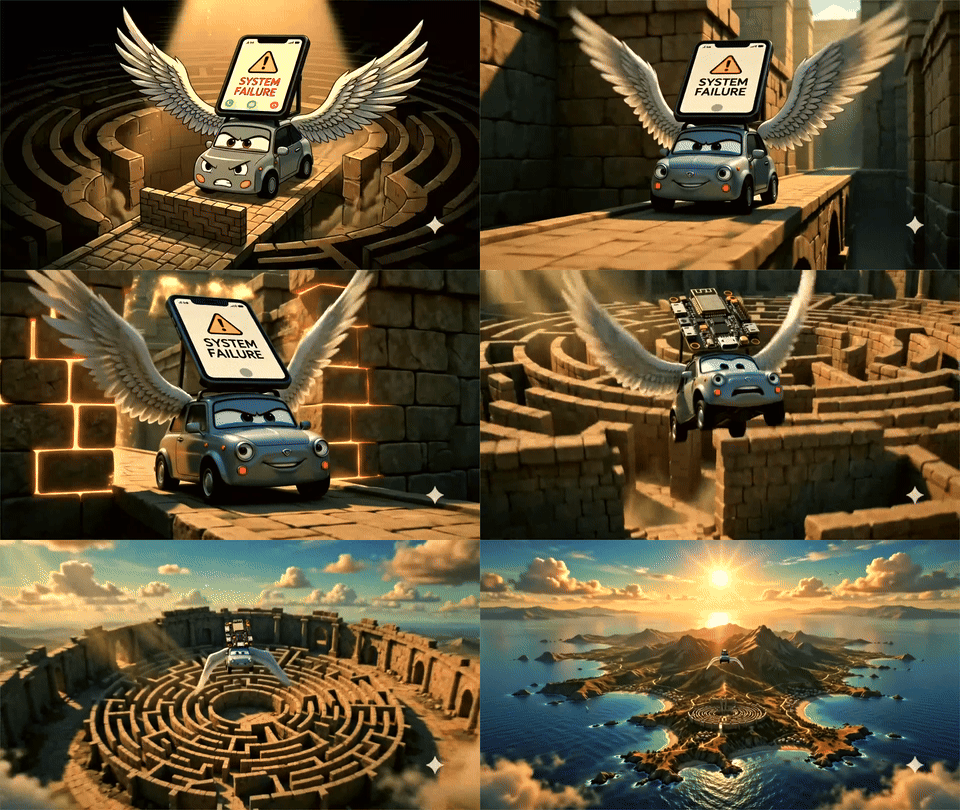
The iPhone killed my car.
Not dramatically. Not with a crash or a spark. It simply went to sleep — the way it always does, protecting itself from overheating, from battery drain, from the chaos of background processes — and took my entire inference pipeline with it. Camera feed, gone. Motor connection, severed. The car sat there, motionless, waiting for a command that was never coming.
Apple’s philosophy is brilliant: privacy, control, user protection. It just has no exceptions for toy cars with ambitions.
Daedalus designed a working flight system. The specs were sound. But Icarus pushed beyond them, climbing closer and closer to the sun. The wax was never the problem. The design was never the problem. The mismatch between ambition and material reality — that was the problem. That is always the problem.
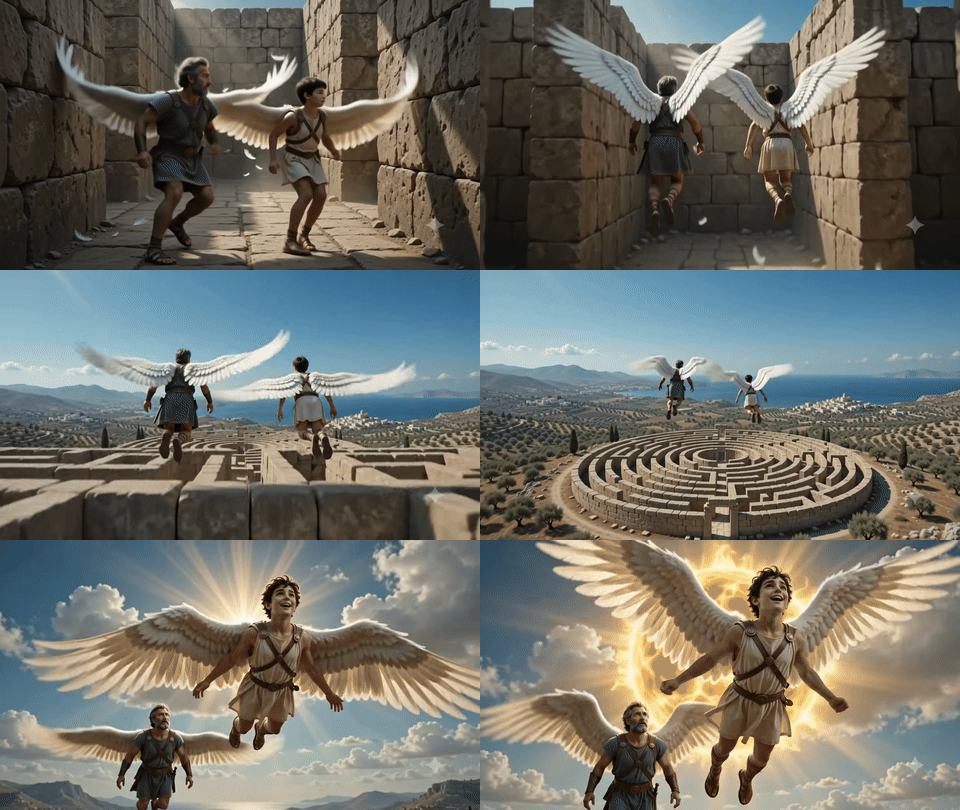
The lesson is that I didn’t over-engineer. I optimized for the wrong thing. I confused powerful with capable.
Sovereign Hardware
I moved to a Raspberry Pi 5. Not a glossy consumer device — a pocket-sized computer that runs entirely on its own terms. No background process manager waiting to kill my threads. No ecosystem deciding what I’m allowed to run. Just hardware, doing what I tell it, for as long as I want.
Everything Worked. Until It Had to Fit.
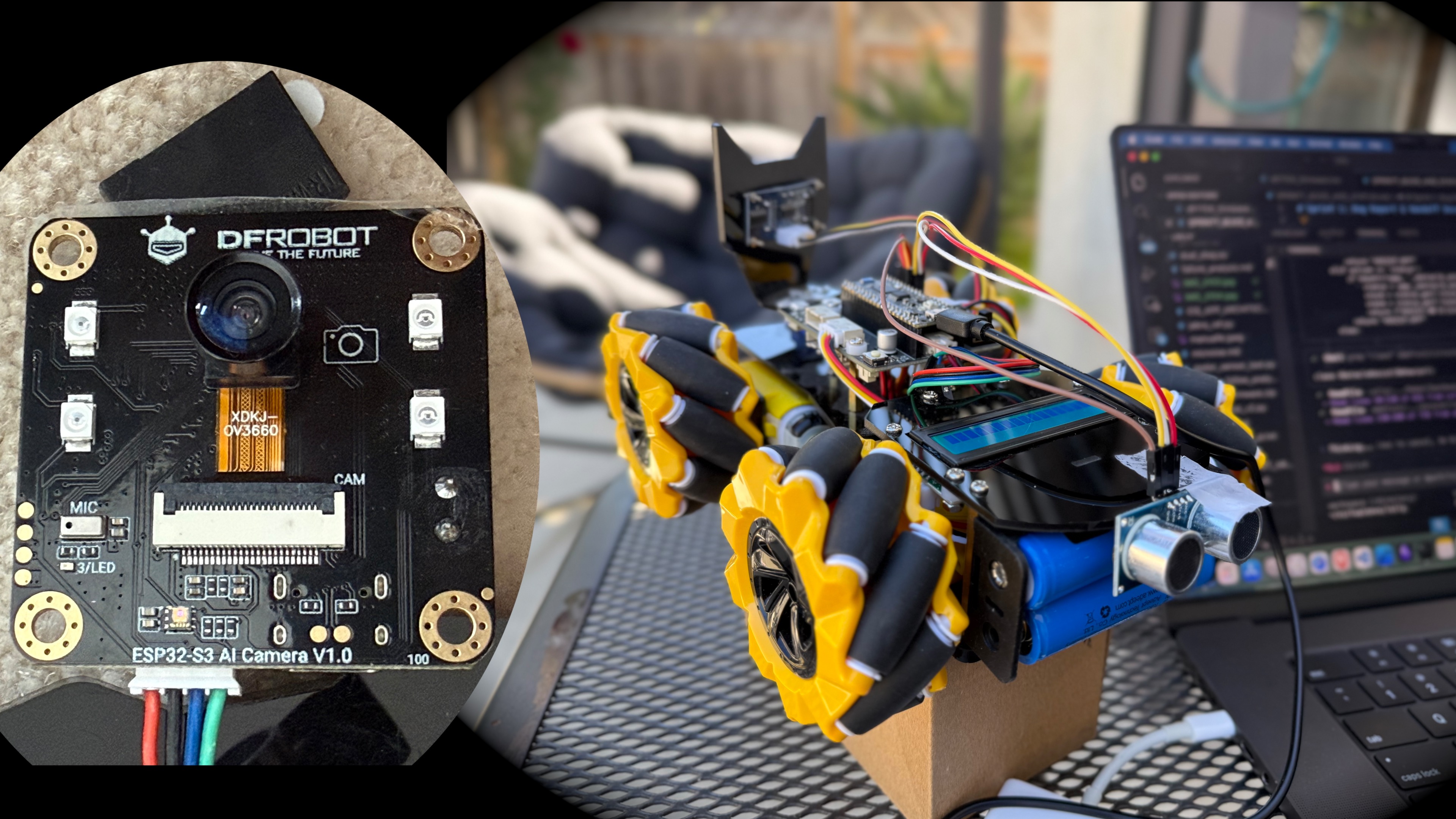
The Pi 5 handled the camera beautifully. Clean frames, real-time YOLO inference, no network round-trips. The microphone worked. The speaker worked. In isolation, everything sang.
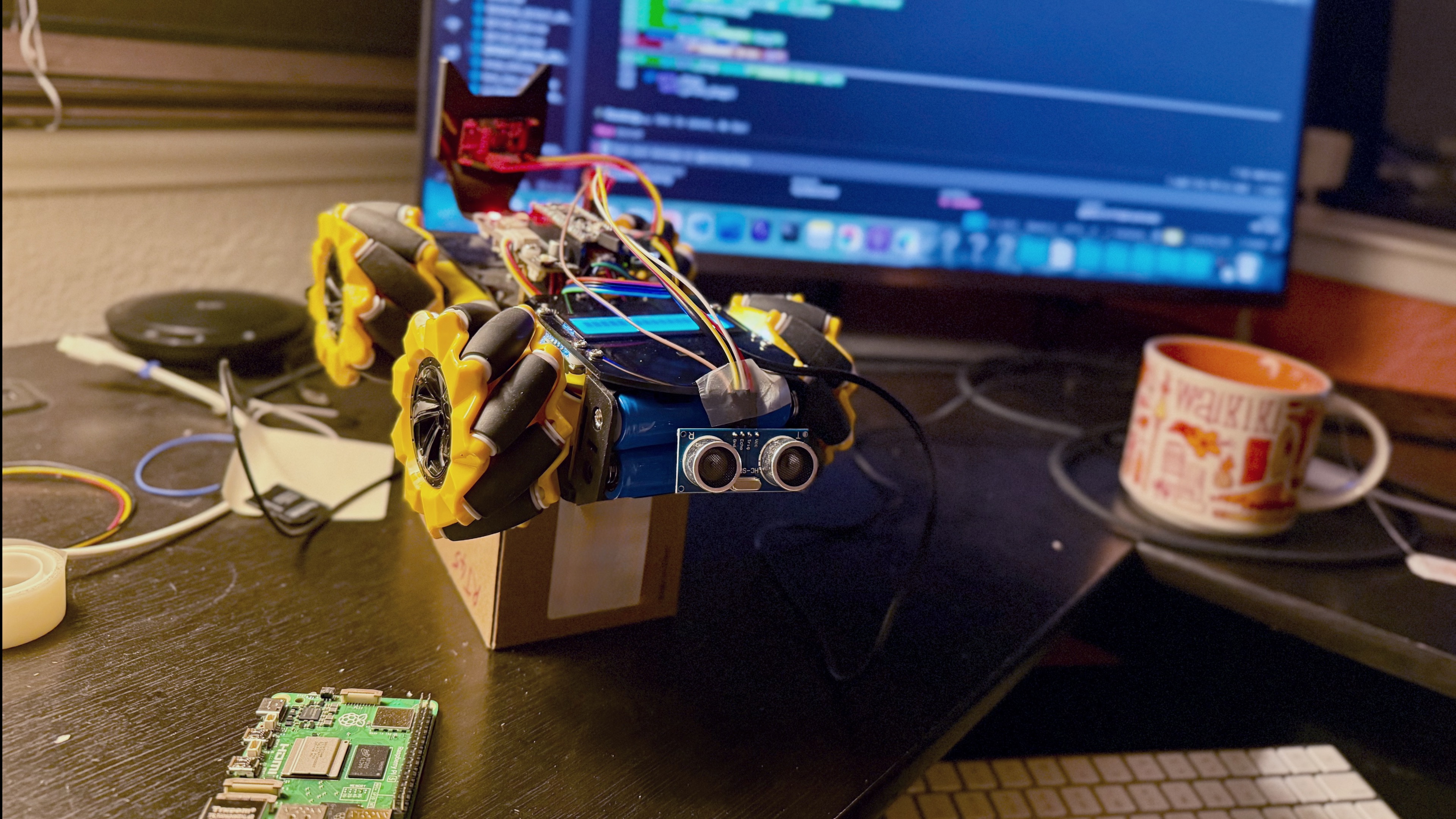
Then I tried to put it all on the car.
|
|
|---|
Two words ended that dream faster than any code bug: real estate and power. The chassis was never designed to carry a Pi 5, a wide-angle camera, a microphone, and a speaker simultaneously. And when I tried bridging the Pi to the motor board wirelessly — Bluetooth, Wi-Fi, didn’t matter — the latency showed up immediately. The Pi would see an obstacle, compute a response, send the command across the wireless gap, and then the car would react. By the time it reacted, the wall was already closer. A hundred milliseconds is an eternity when survival is the question.
Your Spine Already Knew This
This is when the project stopped being about robotics and started being about something older.
The human body already solved this problem. Half a billion years ago, when the first vertebrates developed a spine, evolution made a quiet architectural decision: keep the survival reflex local.
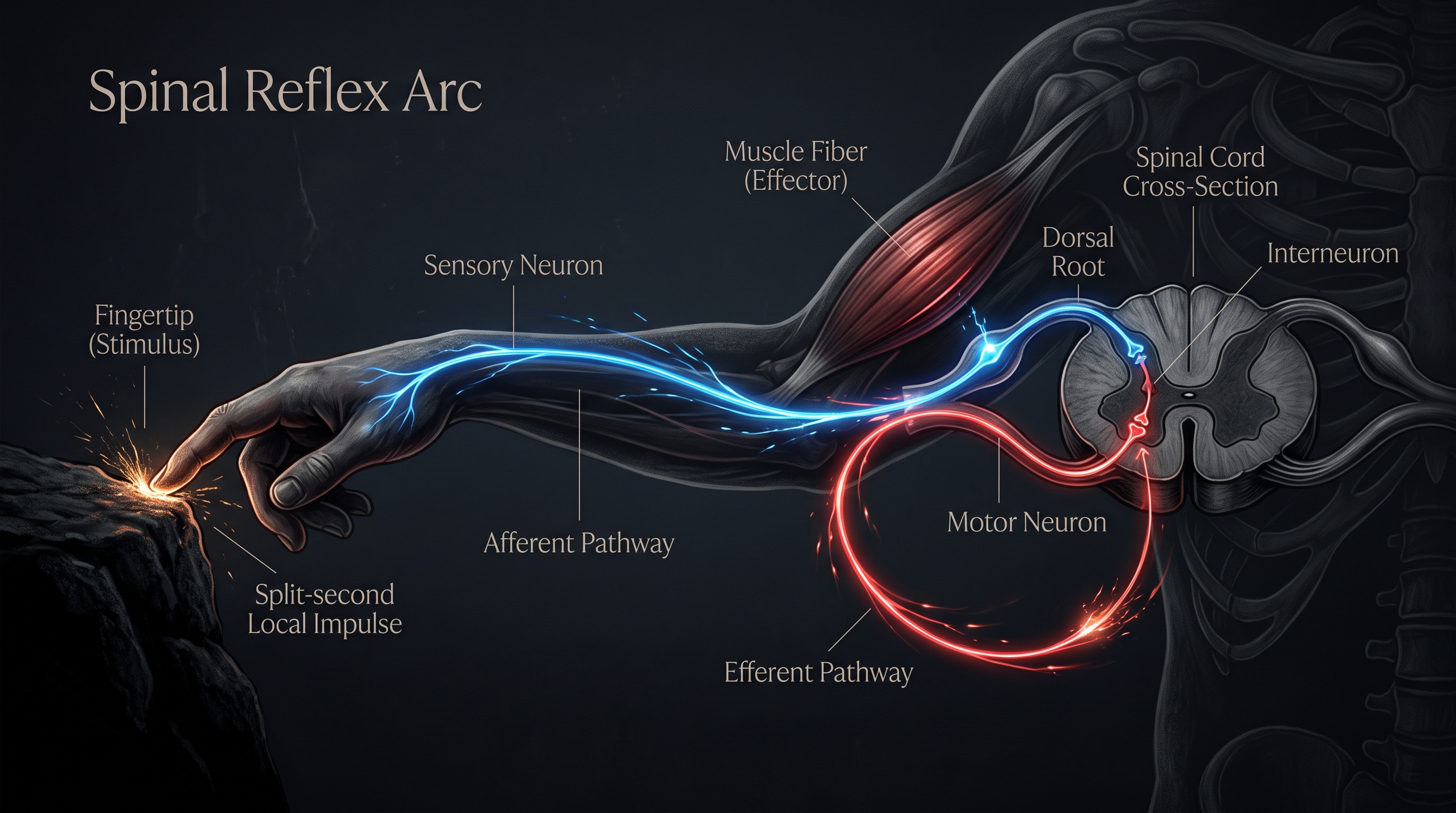
When you touch a hot stove, you don’t wait for your brain to deliberate and issue a response. Your hand pulls back before the pain signal even reaches your cortex. The reflex lives in the spinal cord — local, fast, sovereign. The brain gets notified after the fact. It handles orientation, intention, higher reasoning. The spine handles - don’t die right now. Evolution spent an incomprehensible stretch of time arriving at exactly the architecture I was fumbling toward with a toy car.
The Reflex Has to Live Close
Safety decisions cannot live far from the body. Not across a network. Not across a wireless bridge. The closer the reflex is to the moment, the more effective it can be.
So that is how the car works now. The ultrasonic sensors talk directly to the motor board. Obstacle within 30 centimeters — the car stops. No Pi in the loop, no wireless hop, no round-trip. That reflex is local, the way all reflexes should be. The Pi handles the bigger picture: orientation, awareness, the slower intelligence. The board handles survival.
Where This Is All Going
The on-device models arriving now—smaller, faster, and more capable with every generation—are steadily closing the gap between cloud intelligence and local reflex. We are moving toward a world where intelligence is no longer something we visit in the cloud but something that quietly accompanies us.
Homes may have multiple autonomous companions, each with a specialized purpose, while individuals carry their own, much as we carry phones, watches, and earbuds today.
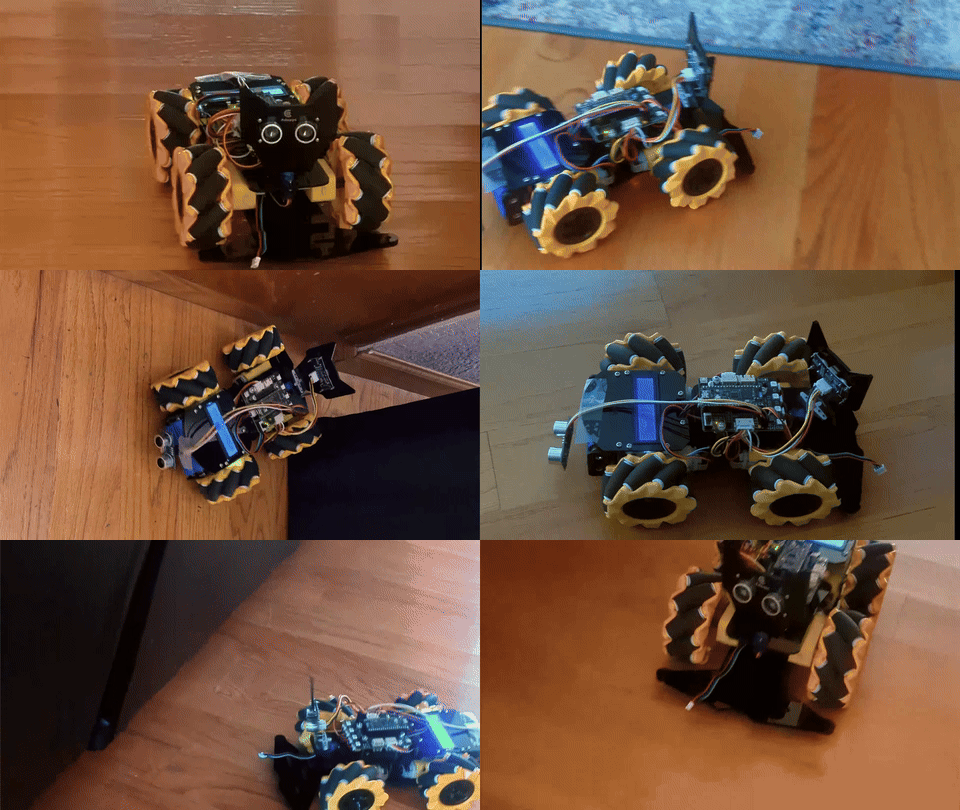
My unfinished toy car, in its clumsy and honest way, was pointing toward that future without knowing it.
The Exit
The car is not done. It may never be done in this form. The Banana PicoW board has limited pins. The battery constrains everything. A proper rebuild — LiDAR, Jetson Nano, larger power system — would be a different machine entirely. At that point it stops being a toy.
But I think that is the point.
The formation was of my own making. So, it turned out, was the exit.
Some formations are designed by enemies. Some by teachers. Some by the part of yourself that wanted to build something worth getting lost in.
In the Greek story, Icarus soared too high. The wax melted. The feathers fell into the sea, and the sea took his name — The Icarian Sea — that is the legend. But Daedalus landed. He understood the boundaries of his creation. He flew within the material reality of what he had. He found the exit.
Some exits can only be found from the inside.
The rings were not a waste. They were the education.
Life is a never-ending sequence of rings. Keep moving and you will find the exit. And if you can’t find the exit — it finds you anyway.
This is Part III, the concluding part of - A Formation of My Own Making.
If you have not yet read other Parts:
Enter the Outer Ring in Part I
Face The Wall in Part II