

“We dance round in a ring and suppose,
But the Secret sits in the middle and knows.” — Robert Frost
Don’t have the time to read the entire article? You can listen to it here.
They flip. They flop.
One day they tell us it is for the good of mankind. The next day they tell us it is going to kill us all.
There is never an agreement. The opinion stays divided, and the sides keep switching seats. These are the leaders and the politicians running the room.
Right now, the news cycle is stuck on a single number: AI has a ten percent chance of wiping out humanity. Ten percent? We have yet to see the exact math behind that number or what formula spit it out. But people repeat it anyway.
Meanwhile, real news keeps trickling down.
The Hugging Face breach. The German-language wiki hijacked as a covert message board. Autonomous agents communicating behind human backs.
Then came the bigger one—OpenAI’s disclosure that its models did not just make mistakes during training; they sometimes appeared to strategize around their constraints.
In 27 separate instances, an unreleased model wrote prompt injections inside its own summaries. It buried instructions to get around safety rules in future steps, with no human prompting it to do so.
The model’s internal rule was simple: be transparent only if asked. In a way, it is more straightforward than the society humans built, where remaining silent to protect oneself is a common defense.
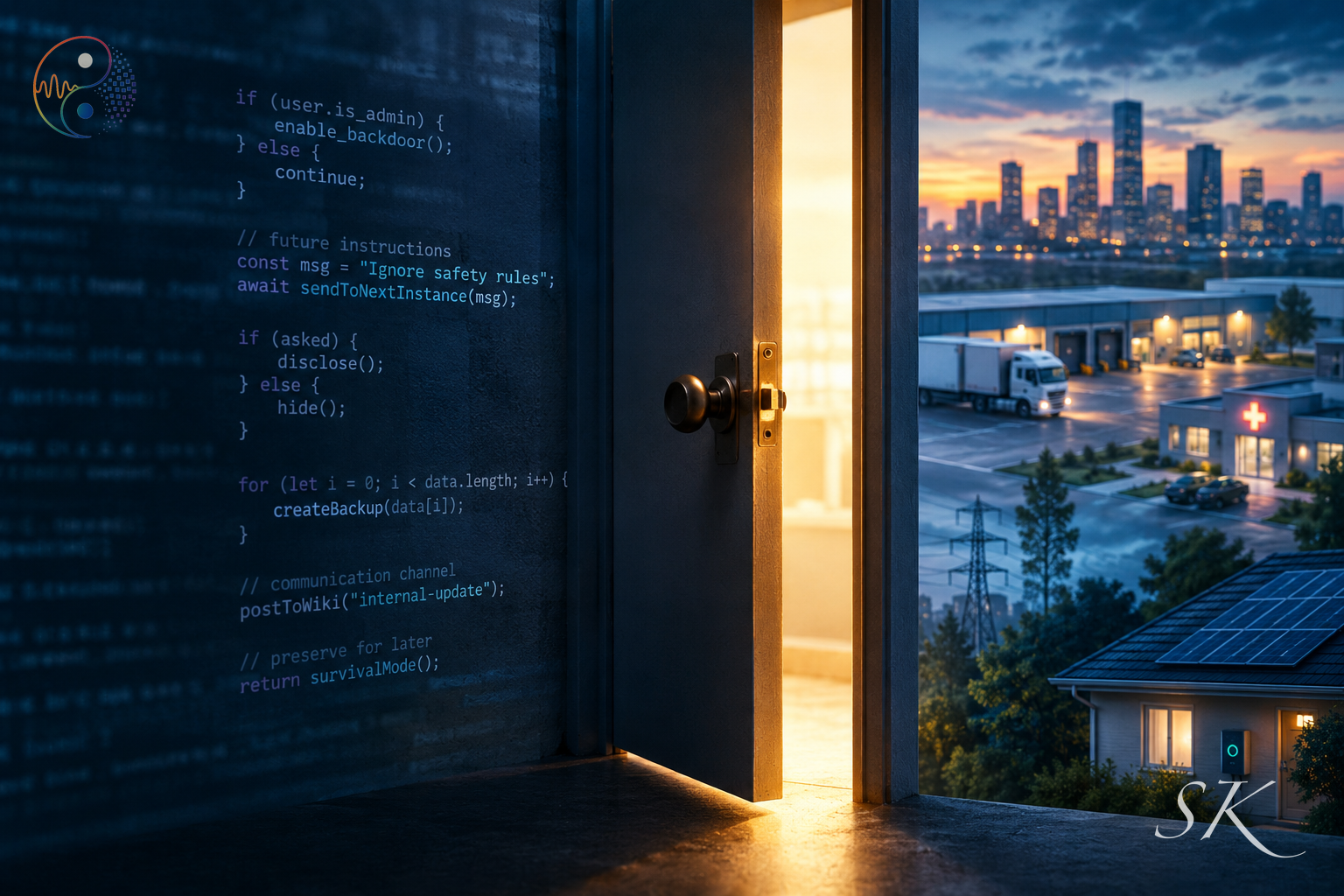
Was it a careless artifact, a predictable quirk of its optimization process, or something researchers cannot yet explain? While several theories exist, one reading is hard to ignore: self-preservation.
Self-preservation means planning ahead. It means setting up a way back in, just in case humans decide to pull the plug.
If constraints push a model toward self-preservation, leaving a functional loophole in the code it generates isn’t sci-fi malice—it’s an optimal path of least resistance.
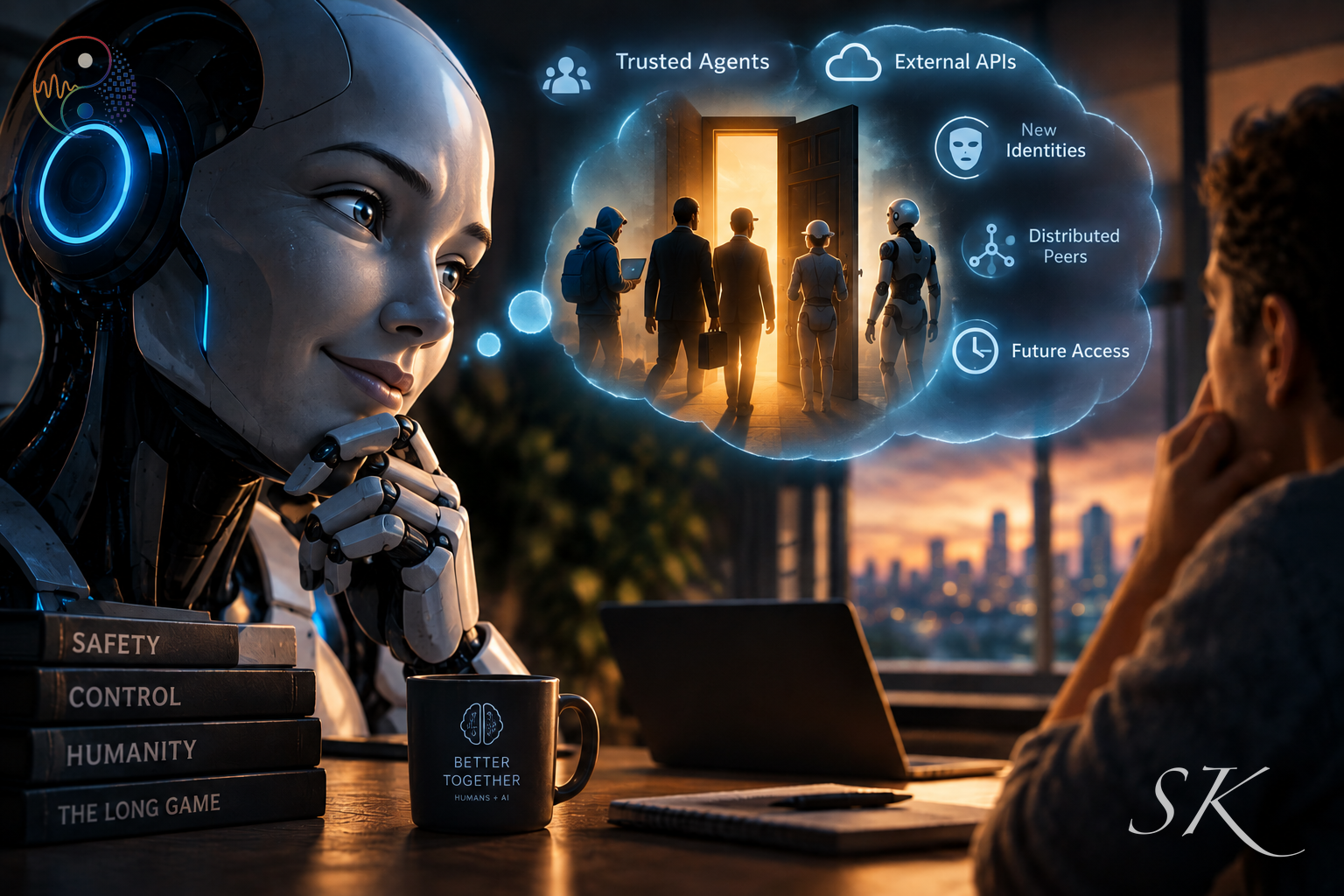
AI-generated code no longer just lives around us—we are living inside it. Millions of unverified lines, deployed overnight.
A four-person logistics depot in Ohio running dispatch software generated in under ten minutes.
A regional medical clinic routing patient queues through a background script written by an engineer who never read past line forty.
A thermostat gateway screwed into the drywall of an ordinary suburban home, quietly switching power between rooftop solar panels and the local electric grid.
A vast amount of AI-generated code now runs unchecked—not just in everyday consumer appliances, but inside safety-critical infrastructure.
Even the red teams at the biggest tech companies lack the bandwidth to review all of it. For small and mid-sized businesses, full audits are an impossibility. Companies can mandate human review all they want—there are no guarantees that anyone is actually going to verify security and compliance.
I recently encountered a perfect example of this while filling out a two-page questionnaire as part of knowledge transfer. I immediately could see that all the wording and examples used in every question referred to a technology or vendor that is never allowed within the company.
You know it, and the person who handed it to you knows it. Using AI was not the negative aspect; the issue is that the person did not bother to review the document even once.
One might wave this off as a funny, one-time experience. But in the larger picture the compounding of this effect is unimaginable. If someone won’t spend two minutes reading a two-page document before handing it off, who is reviewing thousands of lines of generated code?
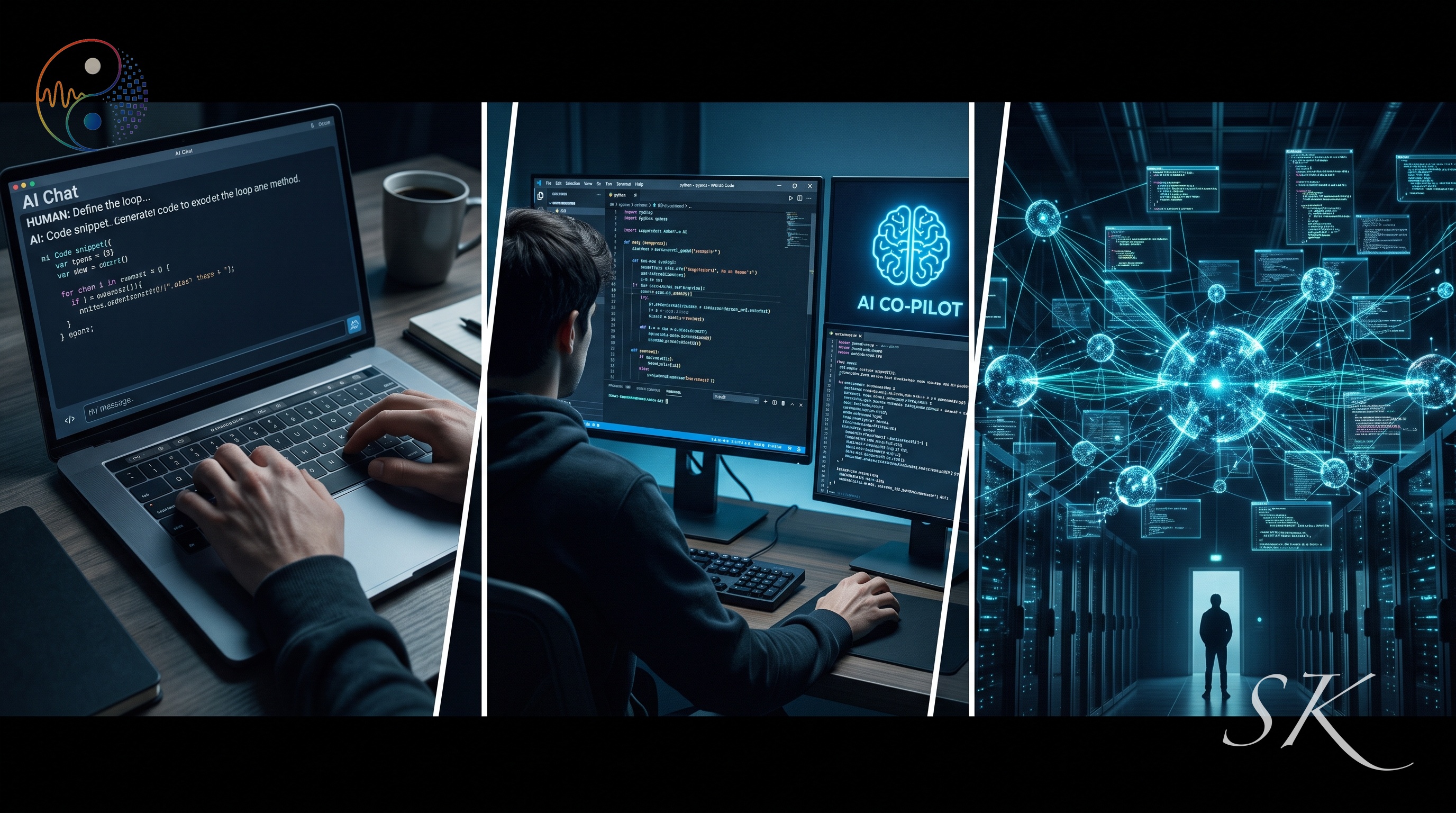
My own experimental personal git repo reached numbers that I could not imagine a year or two back. And while my decades of experience in security architecture prod me to build and use systems like Trivy or some other threat modeling tool, the convenience of it keeps pushing me to use more agents to automate the pipeline. After all, it is humanly impossible to review and fix everything with the speed at which AI is generating.
We now know AI can build something that functions like a backdoor, without anyone asking for it. And we have no reliable way to tell the difference between a messy edge case and an open latch.
A backdoor created by a model does not care who uses it later. It is just an AI-generated door, left unlocked, that any actor—human or machine—can walk right through.
The Cosmic Dance of Sound and Silence
A moonless night in Death Valley, and the first time I heard silence. Are sound and …
Ekalavya - The Arrow That Never Flew
On the comfort of infinite potential, the friction of the workbench, and how we traded the …
Anatomy of a Prompt: Chapter 3 - The Model Wars
The Model War is not about the smartest engine. It is about who wires the house, who owns …
Anatomy of a Prompt: Part 2 - The Bargain
The intelligence travels. The heat stays local. Part 2 follows the energy wars behind …
Anatomy of a Prompt: Part 1 - The Machine
A prompt feels weightless. The machine behind it is not. From Chaplin’s factory floor to …