Don’t have the time to read the entire article? You can listen to it here.
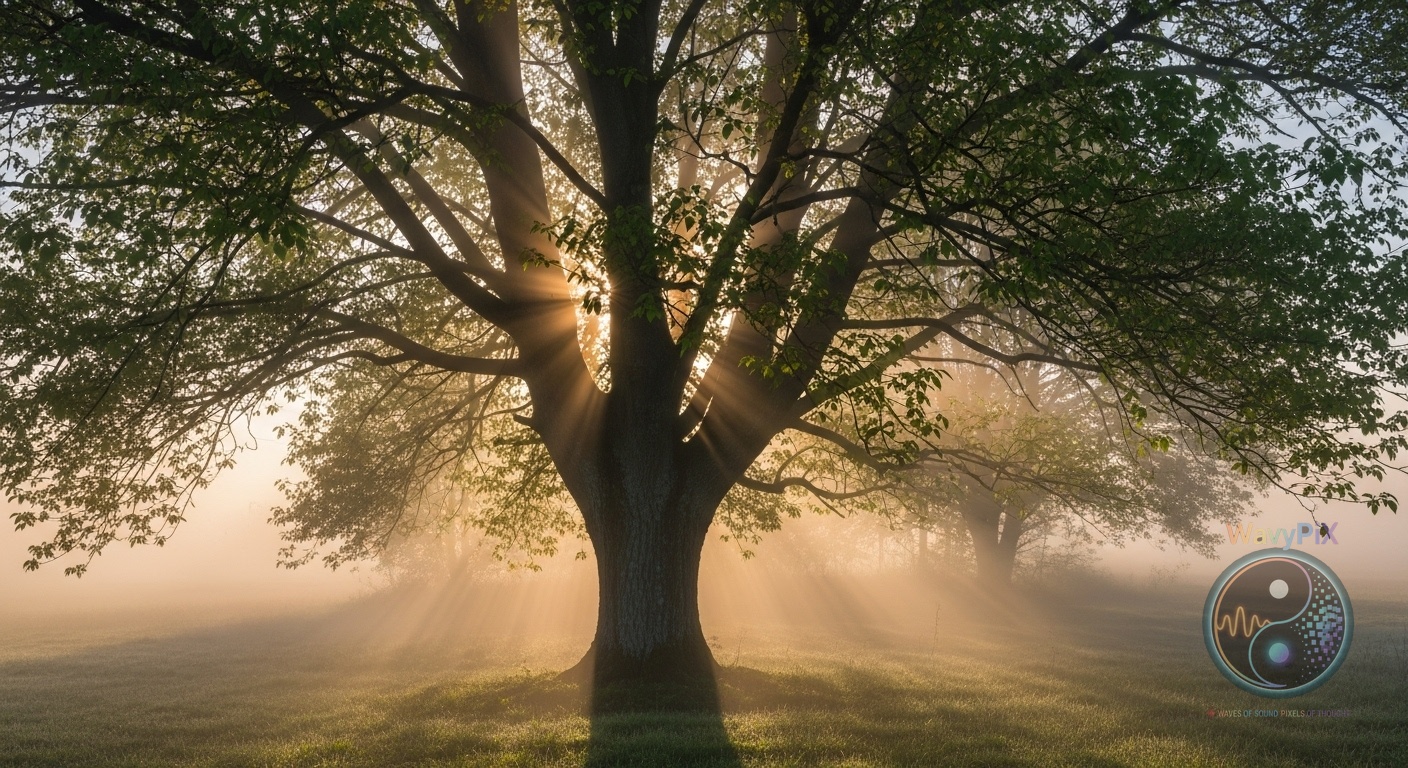
I didn’t know the name when I first saw her. She had a glow to her and was very vibrant—tall, wide, and reaching out to the sky, with a huge canopy that dwarfed many others around her. Then I found the name—Alder. I learned that she enriched the soil, supplying much-needed nitrogen so other species around could benefit from the healthy soil. The Alder tree stood in the backyard and could be seen from the bedroom, from the kitchen, and from outside. Over the years, I grew accustomed not only to her presence, but to the thriving ecosystem that flourished around her.

She bore fresh new leaves in the early beautiful Californian spring season. As the shedding of the leaves slowly stopped, the bright bark and healthy leaves were revealed. Spring brought so many creatures with it.
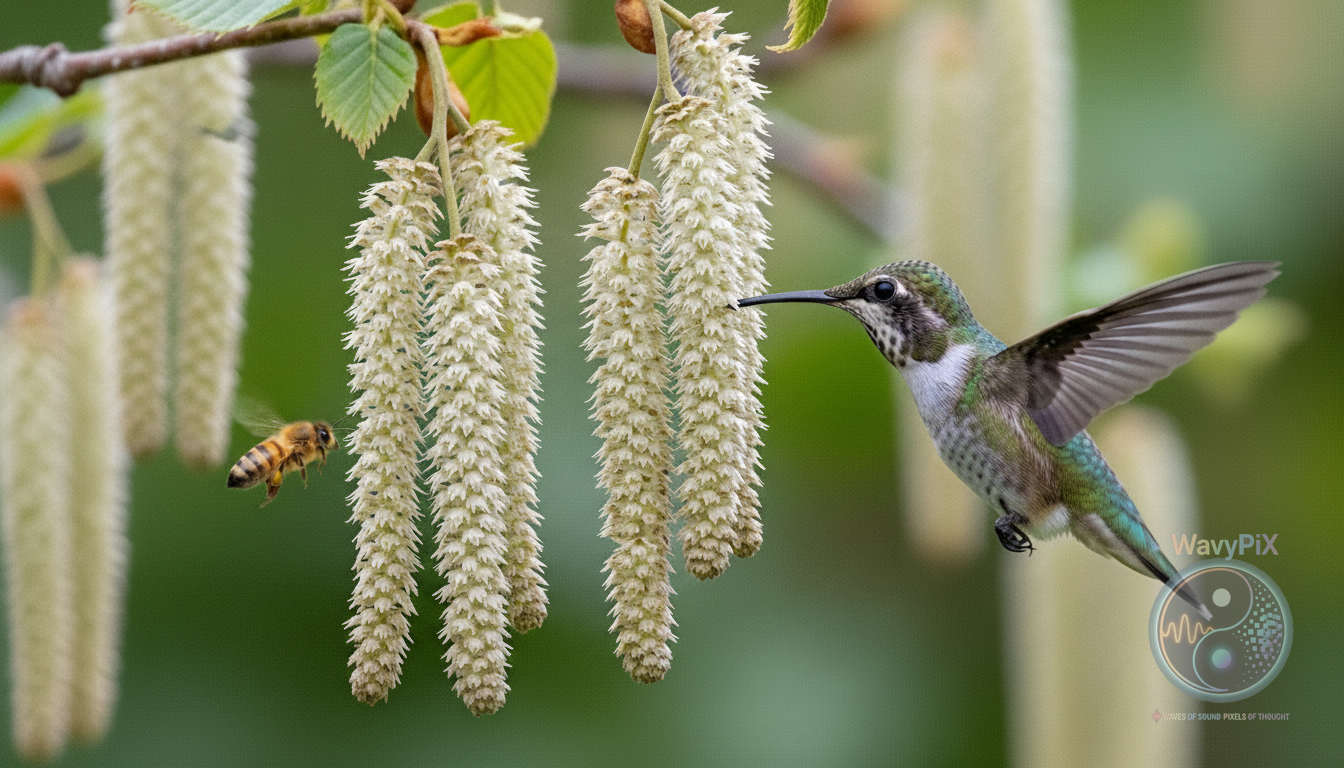
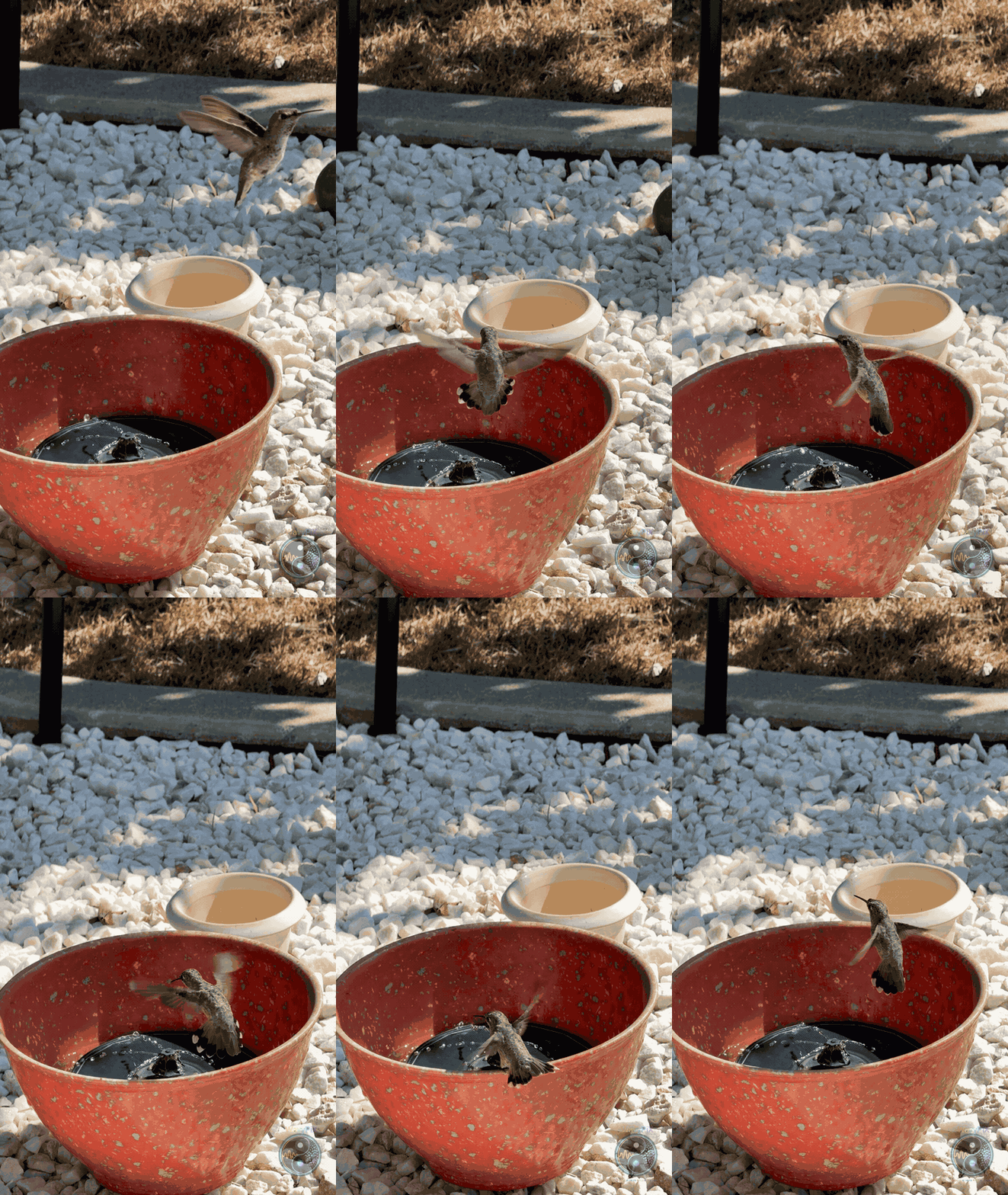
The hummingbirds were always there, hunting tiny insects among the falling pollen and scales that fell off the tree, sometimes carrying along the pollen from the tree. That’s when I came to know two things.
First, that the hummingbirds not only sucked nectar but ate those tiny insects among the falling particles.
Second, that the Alders are monoecious, meaning they have both male and female flowers called catkins. The catkins do not look like the regular flowers we usually tend to visualize, but are long, drooping cylindrical structures and cones.
An interesting fact is that they could potentially self-pollinate, but mostly depend on the winds to carry the pollen; the male flowers mature early, release the pollen, and fall off before the female flowers are ready to receive, a natural design that prevents self-pollination as much as possible. This fact from nature always amazed me.
There were many other birds that hung around chirping constantly, some I knew the names of, and some I didn’t—aggressive blue jays with their loud screeches, woodpeckers in a couple of different colors knocking on the wood, and various sparrows, some with yellow beaks and others with yellow bellies, all dangling upside down from the catkins scouting for food.
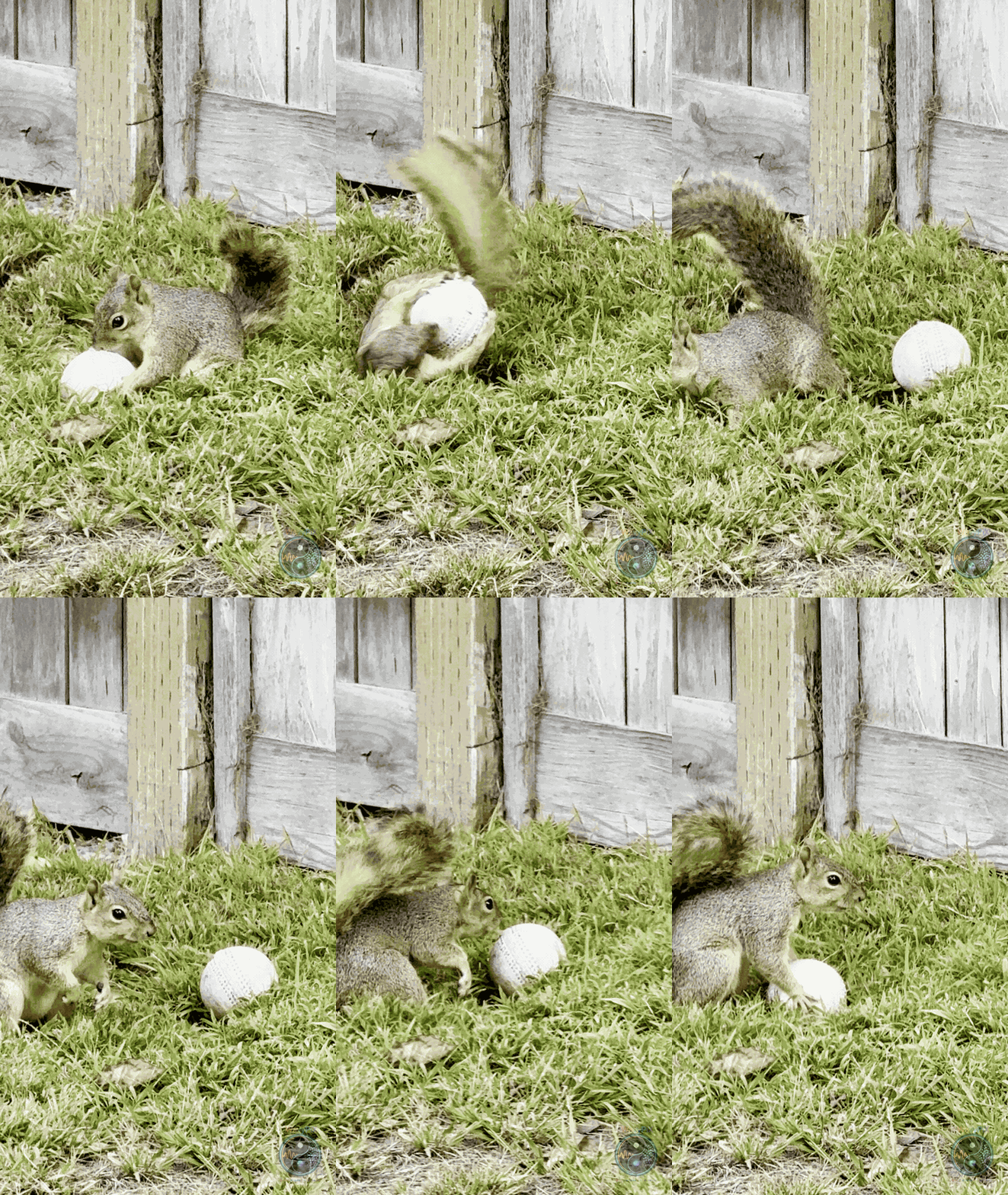
Then there was the ever-present squirrel I called Pamela. I don’t know why, but that name suited her well. No offense to anyone with that name. It was fun watching Pamela jump from branch to branch, chasing her own tail.
Spring also brought the mockingbird into the area, its mimicking sounds continuing through day and night, getting louder by the night as the man-made noise died down.
Then came the ocean-like buzzing sound over many days of spring through summer, the swarms of bees carpeting the entire tree and then the grass underneath on the ground.
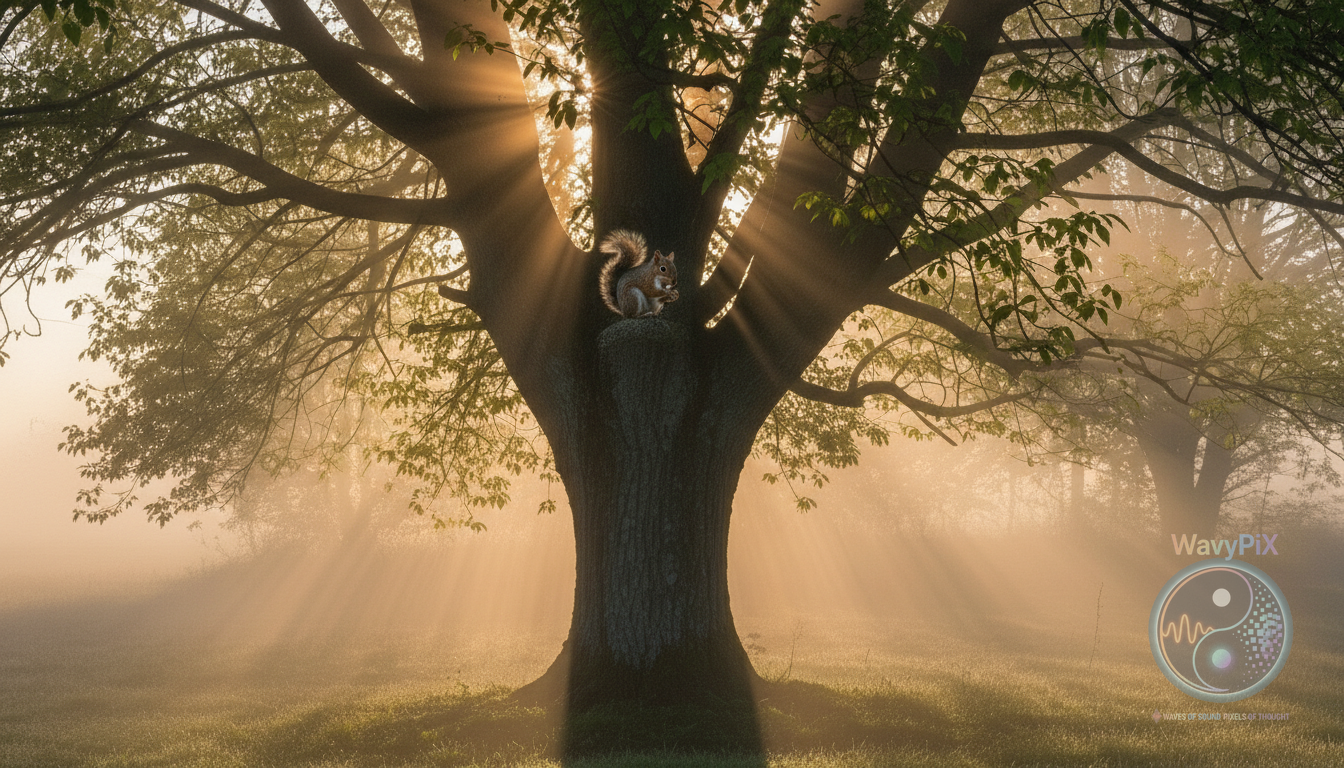
While heavy winds could occur during any time of the year in this area, they appeared more frequently as the temperatures cooled down and the typical rains started around November. She shed more leaves and the ground below became a thick carpet of leaves and catkins that continued into March or so. While the sounds from the heavy rains and gusts were scary, particularly in the nights while sleeping in the bedroom next to her, she maintained an elegant posture and never showed any strain.
Over the years she was there through all weather and time, providing benefits that were both visible and invisible—and that I took for granted.
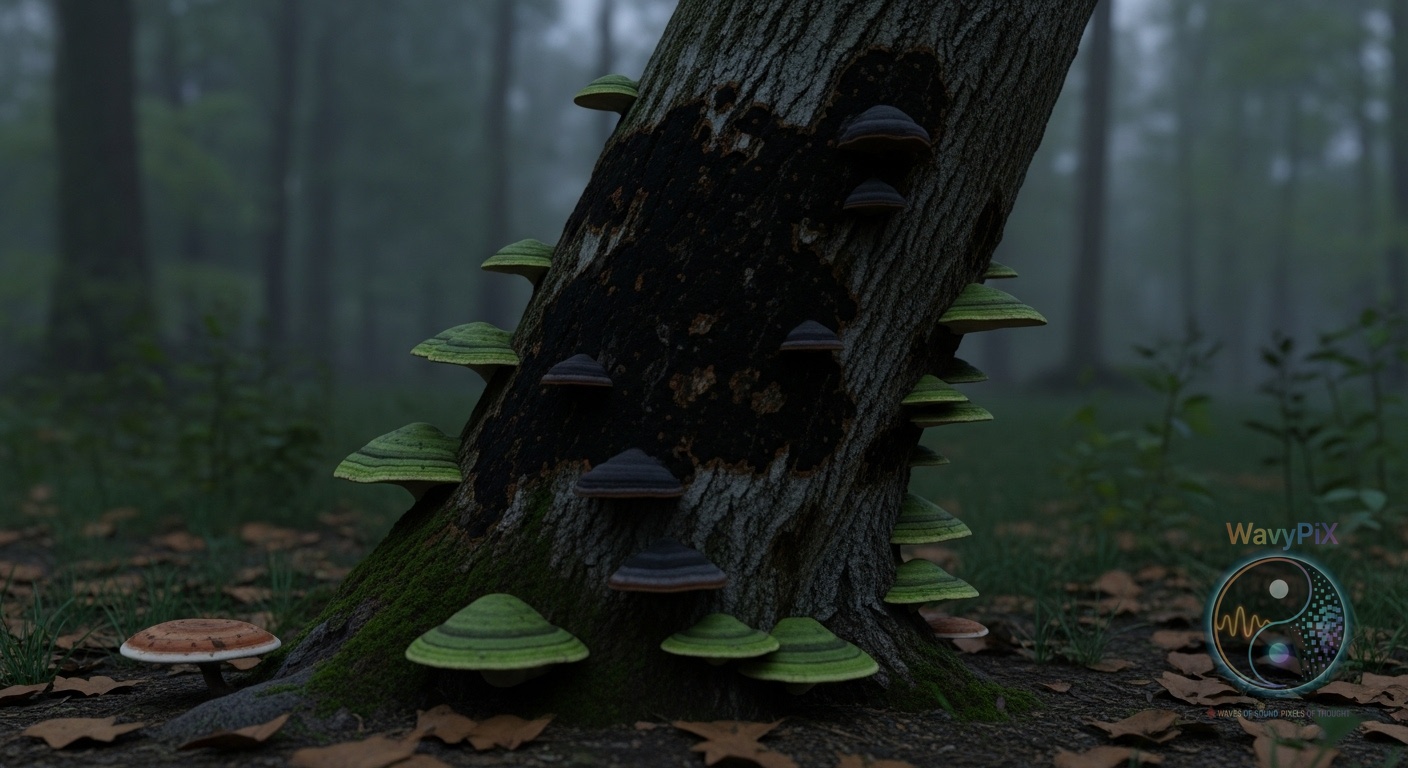
Eventually, the woodpeckers started to visit a lot more, trying to find insects feeding on the decaying wood. And that’s when I started to notice she was developing a lot more dry wood and her trunk was leaning a lot more to one side, more than what it used to be.
And I thought the constant presence of mushrooms was a good sign of the soil. But when mushrooms proliferated in various colors, including dangerous-looking black ones, I started to pay more attention. There were too many dark spots around the trunk going all the way from ground to the branches.
The arborist said, “There is a lot of fungus inside the trunk. Usually, trees defend themselves against harmful fungi by using the bark as a barrier and also by compartmentalizing the damaged areas, but in this case it is severe. It could be from improper pruning or it could just be the age. Alders usually live 50–60 years, and this tree is very old. I would give it 6 months to 1 year. You may want to make a decision in the next 6 months.”
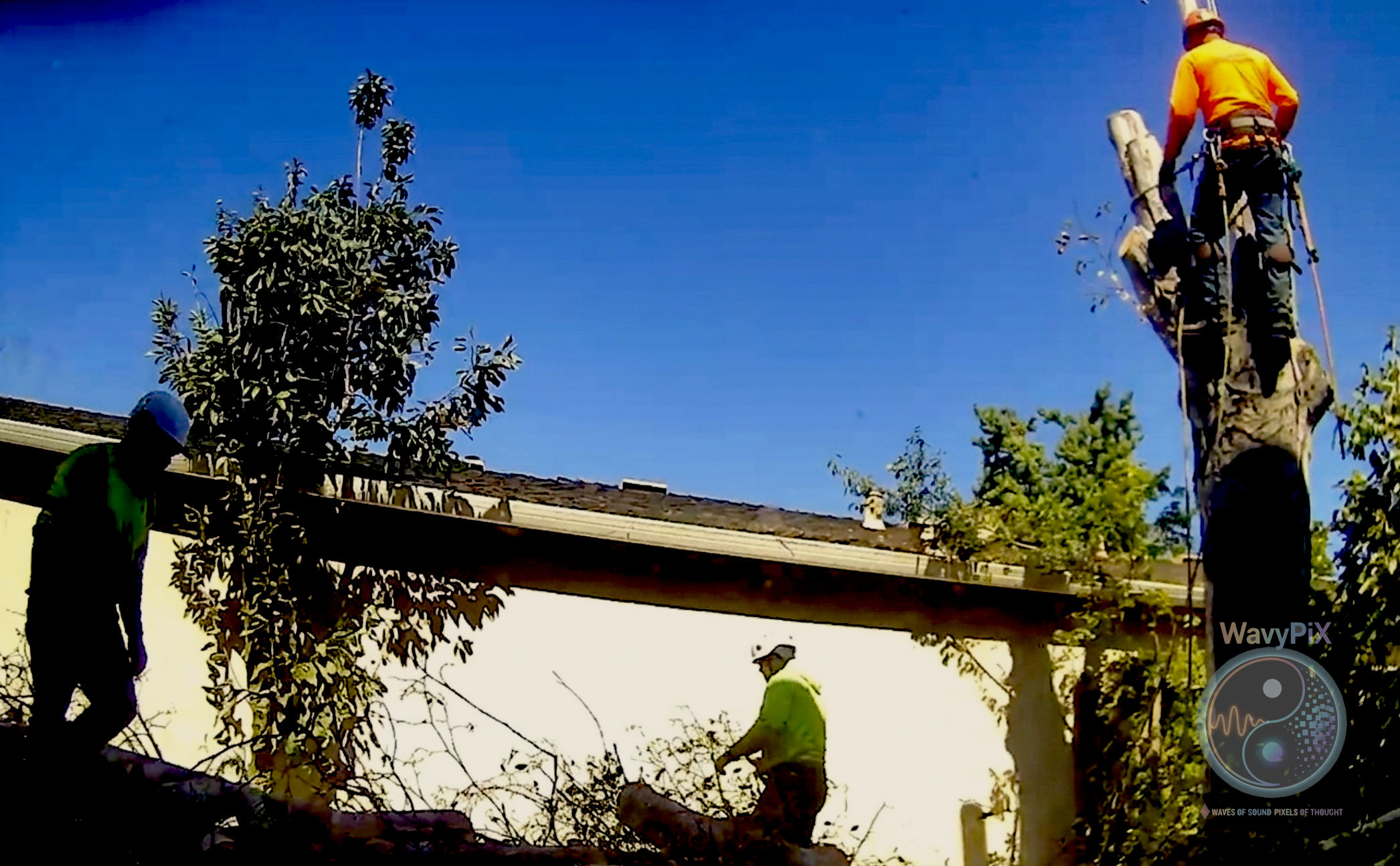
Did the Alder think it was just a regular pruning when the arborist started working on the branches? She couldn’t have known how much was about to fall.
Did she wonder why he wasn’t stopping as he continued chopping off more than usual?
As he continued to go down the trunk, slowly chipping away all the way to the roots, the Alder went back to her roots, where she came from.
Afterthought:
I don’t know how much value I bring to this planet or the people around me, either intentionally or unintentionally, directly or indirectly. But even if we hypothetically state that the Alder, other trees and plants are living for their own selfish reasons, the side effects of their lives seem greater than any possible harm they could do to this planet—even if that hypothetical statement is a distant possibility.
She provided this great ecosystem that played to both the visual and auditory senses, to anyone who had a moment to pause and enjoy. Even for those who are not into all this, she still provided all the various things a tree gives back to this planet. Even in her death she was gracious.
Sometimes I justify the stargazing from all the open space left in her absence.
I still see the birds, bees, and hear their chirping and sounds. They all just moved to the neighbor’s backyard. I hope I get to see them even if it’s from a distance.
Ekalavya - The Arrow That Never Flew
On the comfort of infinite potential, the friction of the workbench, and how we traded the …
The Cosmic Dance of Sound and Silence
A moonless night in Death Valley, and the first time I heard silence. Are sound and …
The Backdoors of the Future
A backdoor created by a model does not care who uses it later. It is just an AI-generated …
Anatomy of a Prompt: Chapter 3 - The Model Wars
The Model War is not about the smartest engine. It is about who wires the house, who owns …
Anatomy of a Prompt: Part 2 - The Bargain
The intelligence travels. The heat stays local. Part 2 follows the energy wars behind …